


View Featured Categories
The One Item on Every Emergency Preparedness Checklist You Can’t Improvise


Preparedness · Emergency Planning
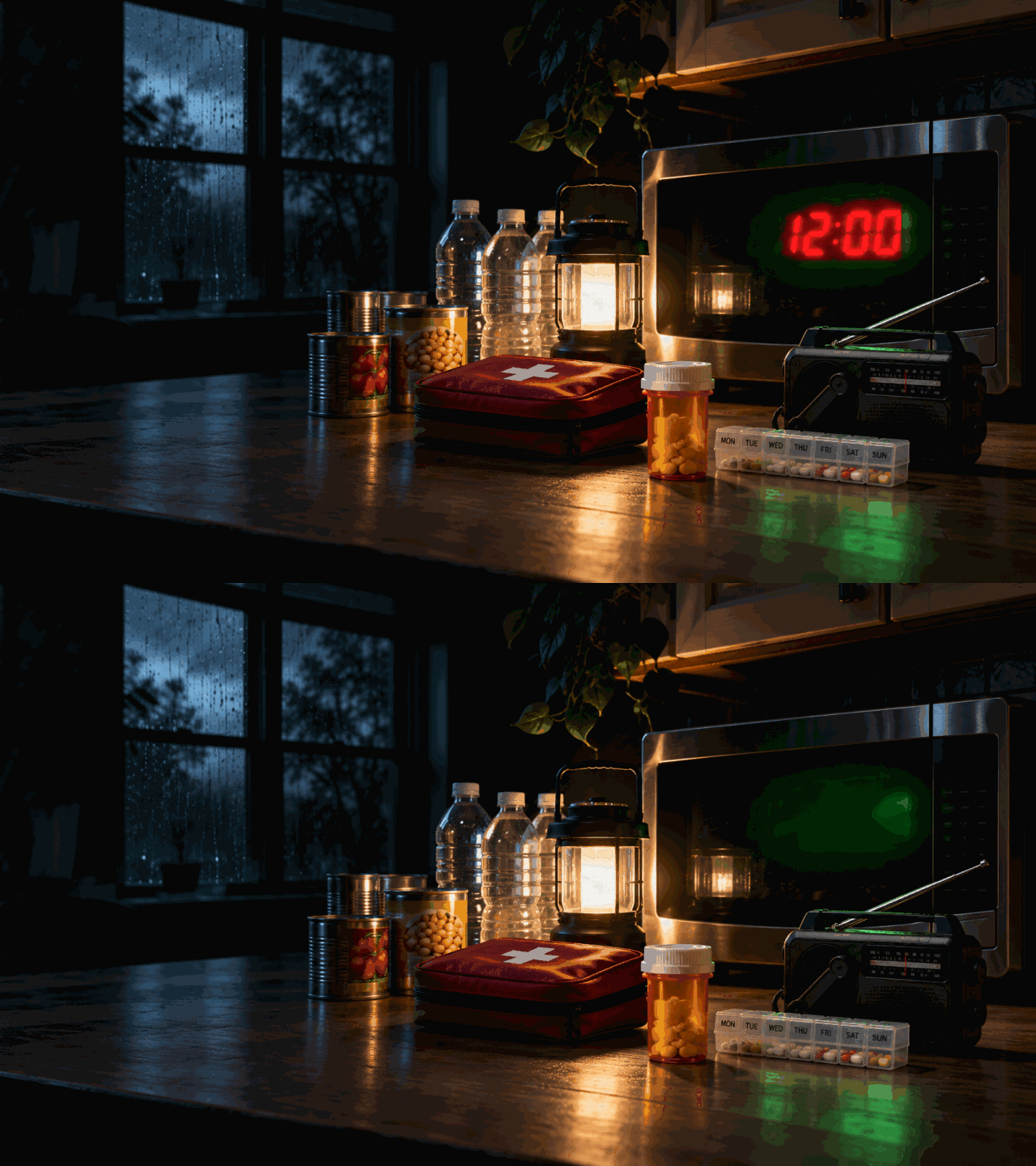
It usually starts with the microwave clock.
One minute it reads 6:42. The next, it’s dark, the refrigerator has stopped humming, and the house is so quiet you can hear the neighbor’s dog wondering what happened. Most of the time, the lights flicker back on before anyone finds the flashlight.
Most of the time.
This fall, a surprising number of governments decided “most of the time” wasn’t good enough.
Most government emergency preparedness checklists cover the same basics: water, no-cook food, a light source, a radio, cash, and a first aid kit. The one item you can’t improvise is medicine. Food and light have substitutes, and prescriptions don’t, which is why Norway advises keeping at least a seven-day extra supply of the medicines you use regularly.
The world just compared emergency preparedness checklists
On Oct. 22, the U.K. Cabinet Office launched “Be Ready,” the first phase of a three-year campaign asking households to manage at home for up to 72 hours during a disruption. The checklist reads like a camping trip planned by an accountant: three liters of drinking water per person per day, no-cook food, a battery- or hand-crank radio, and cash in mixed denominations in case card readers and ATMs go down. It also lists a first aid kit and essential prescription medications.
Britons took the hint. After the launch, the retailer Maplin reported torch—flashlight, to us—sales up 284%, and the grocer Iceland reported tinned food sales up 40%.
The U.K. is hardly alone. According to a Newsweek roundup, Japan and the Netherlands point residents toward 72 hours of supplies, Sweden and Norway toward about a week, and Germany toward as many as 10 days. Governments give a familiar set of reasons: extreme weather, geopolitical tension, and threats to the systems that keep the water running and the lights on.
Then there’s the U.S., which went bigger, just not at your house.
Ninety days for the bases, “several days” for the rest of us
On Sept. 30, Defense Secretary Pete Hegseth unveiled FORTRESS, short for Federal Operations for Resilience, Troop Resources, Energy, Supply, and Survivability. The initiative calls for every major continental U.S. military installation to keep essential operations running for at least 90 days without outside help, covering power, water, fuel, and communications. Hegseth called it “the nation’s insurance policy."
The plan also calls for strategic reserves of munitions, fuel, spare parts — and medical supplies.
Hold that thought.
For civilians, federal guidance hasn’t budged. Ready.gov still recommends a “several-day supply” of nonperishable food and one gallon of water per person per day for drinking and sanitation. There’s no stockpiling mandate and no countdown clock.
(If you noticed that the U.K. says three liters and the U.S. says one gallon, which is about 3.8 liters. The American figure includes washing up. Same water, different bookkeeping.)
The line item nobody can improvise
Read enough of these checklists and a pattern emerges.
Food is flexible. Run out of canned soup, and you eat the peanut butter, the crackers, and that can of chickpeas whose purchase date is lost to history. Light is flexible too: a phone, a lantern, the scented candle nobody admits to buying. Even water has a workaround if you filled the bathtub when the storm warnings started.
Medicine is not flexible.
You can’t swap one prescription for another because it happens to be in the cabinet, and a pharmacy that’s closed, dark, or out of stock doesn’t care how organized your pantry is. Ready.gov says so plainly, noting that emergencies can make it hard to get refills or find an open pharmacy.
Norway gets even more specific. Its Directorate for Civil Protection advises households:
“Have at least a seven-day extra supply of medicines and medical equipment that you use regularly.”
Did you catch that? Not a seven-day supply. A seven-day extra supply. The agency also suggests picking up a refill no later than a week before you run out.
That’s the quiet lesson buried in all these lists. Water and food grab the headlines because they’re easy to picture. The medical layer is the hardest part to improvise on short notice: first aid supplies, over-the-counter basics, and the prescriptions a household relies on. Even the Pentagon, planning for three months, put medical supplies on its reserve list.
It’s also the category TWC’s medical emergency kits focus on. They pair first aid supplies with prescription medications, which require a consultation with a TWC provider.
Prepared is not the same as worried
None of this calls for a bunker. The British Red Cross notes that the 72-hour guidance aims to reduce stress and uncertainty, not to require major lifestyle changes or stockpiling. It also reports that only around 40% of people in the U.K. feel able to take action to protect their households during a disaster.
William Spencer, the charity’s disasters product manager, put it:
“… those that are prepared definitely cope better. It’s that simple.”*
That’s not a call to fear the dark. The Red Cross points out that the first few days after an emergency are often the hardest, and the easiest time to get ready is when nothing is wrong.
Frequently Asked Questions About Emergency Preparedness Checklists
How much water should an emergency kit include?
The U.K.’s Be Ready checklist calls for three liters of drinking water per person per day. Ready.gov in the U.S. recommends one gallon (about 3.8 liters) per person per day because that figure covers sanitation as well as drinking. Either way, multiply the daily amount by the number of people and the number of days a household plans for.
How many days of medication should I keep for emergencies?
Norway’s Directorate for Civil Protection advises keeping at least a seven-day extra supply of the medicines and medical equipment you use regularly, and picking up a refill no later than a week before you run out. Ready.gov notes that an emergency can make it hard to refill a prescription or find an open pharmacy. A doctor or pharmacist can advise on what’s possible for a specific prescription.
Back to the clock
Most outages end the same way. The microwave blinks back to life, flashing 12:00, and everyone moves on.
Preparation doesn’t change whether the lights come back. It changes how the hours before they do feel: like an inconvenience or like an emergency.
The Pentagon is planning for 90 days. Much of Europe is planning for three to 10. Your household doesn’t need to match either number. It just needs to know which items on the list can’t be swapped for something in the pantry, and to have them on hand before the clock goes dark.
The item you can’t swap
Food, light, and even water have workarounds when an outage runs long. Prescription medications don’t, which makes them the one line on an emergency preparedness checklist worth handling before the clock goes dark. A few extra days of the medicines a household relies on, refilled ahead of time, can make an outage feel like an inconvenience rather than an emergency.
You Might Also Be Interested In
References
- British Red Cross. (2026, October 30). Why are we being asked to prepare for 72 hours? British Red Cross.
- Chen, E. (2026, October 29). What Britain’s ‘Be Ready’ campaign means for your household: Water, cash, and a defence secretary’s countdown. Latin Times.
- Cook, E. (2026, October 26). What is FORTRESS? Pentagon’s 90-day plan to keep US military bases running. Newsweek.
- Federal Emergency Management Agency. (n.d.). Build a kit. Ready.gov.
- Lin, B. (2026, October 26). Pentagon orders bases to plan for 90 days without the grid as Britain urges families to stockpile food and water. Fortune.
- McFall, M. R. (2026, October 29). [Map of countries urging residents to stockpile food]. Newsweek.
- Norwegian Directorate for Civil Protection. (n.d.). Frequently asked questions about self-preparedness. DSB.
*Quoted opinion of a British Red Cross representative. It reflects the organization’s field experience and does not guarantee any particular outcome.
Medical disclaimer: This content is for informational purposes only and is not medical advice. It does not replace consultation with a qualified healthcare professional. Talk with your doctor or pharmacist before changing how you store or refill prescription medications.


