


View Featured Categories
Your Hearing Loss May Not Be a Sign of Aging: Understanding Acoustic Neuroma


Hearing Health · Acoustic Neuroma
About 2,500 to 3,000 new acoustic neuroma cases (aka vestibular schwannoma or AN) are diagnosed in the United States each year — roughly 1 to 4 per 100,000 people annually, and the rate is growing.
Acoustic neuromas are slow-growing, benign tumors — benign until they get so large they push on the brainstem, which can be life-threatening. They form on the balance nerve of the ear, the 8th cranial nerve, which connects the ear to the brain.
Acoustic Neuroma: Not So Rare Anymore
Once thought rare, acoustic neuromas have become more common in recent decades. Researchers have speculated increased MRI use, radiation, or excessive exposure to loud music, but no firm cause has been proven.
About 50% are diagnosed between the ages of 40 and 60, with most being diagnosed later in life. If diagnosed before age 30, a genetic mutation affecting both sides of the brain accounts for about 5% of cases.
Symptoms Include
- Single-sided hearing loss
- Ear fullness
- Persistent ringing (tinnitus) in one ear
- Facial weakness or twitching
- Facial pain or numbness
- Swallowing problems
- Hydrocephalus (fluid buildup in the brain) (1,2)
About 5% of all acoustic neuromas result from a rare genetic disorder called neurofibromatosis type 2 (NF2), which can cause symptoms in both ears. However, evidence points to dysregulation of the NF2 gene as a probable cause for the 95% that do not have that disorder. (2,3)
Broccoli Sprouts: A Promising Ally in AN and Other Cancers
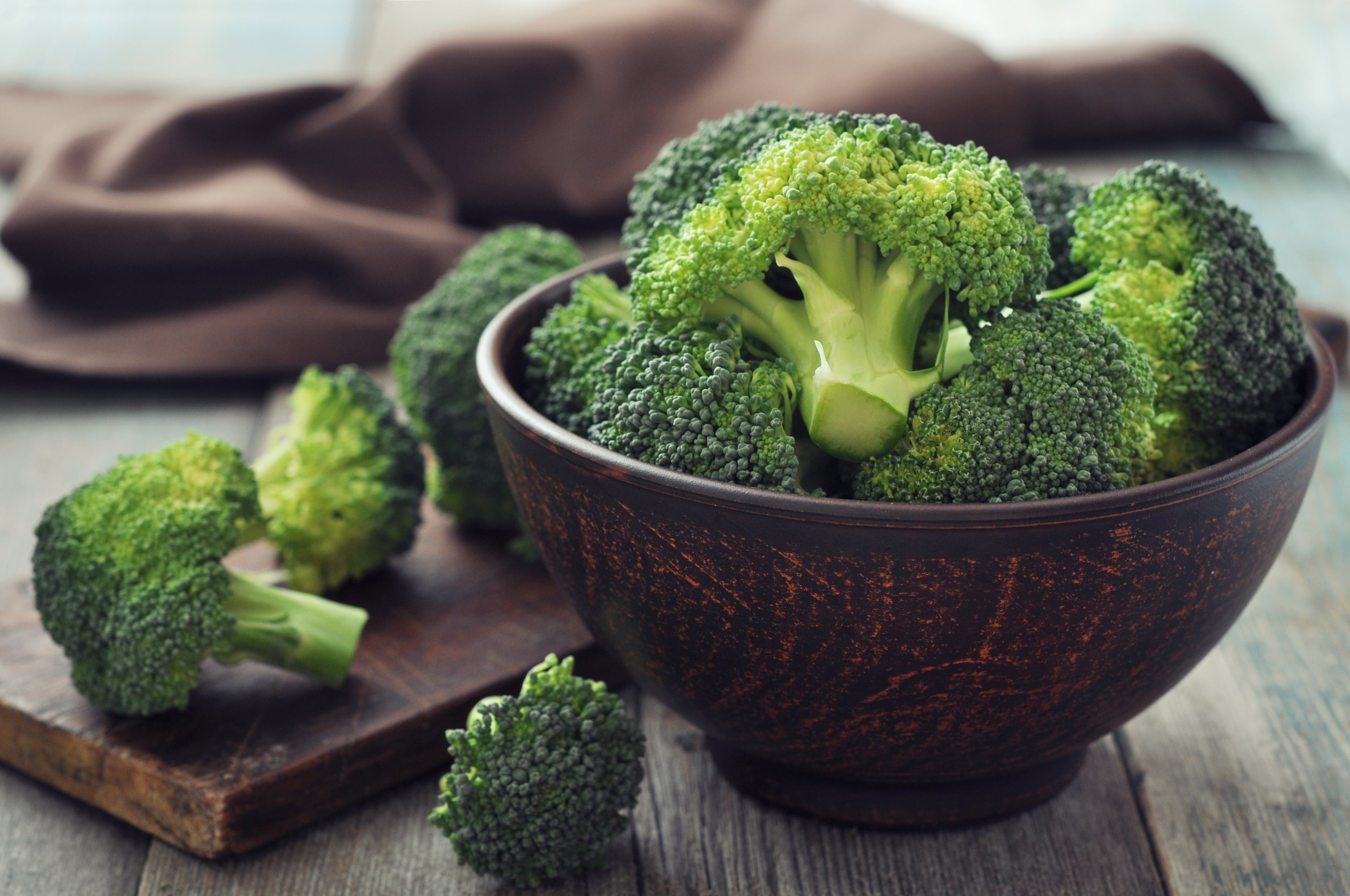
Because no firm cause has been pinned down, researchers have also been looking at what might help slow these tumors, and one candidate comes from an everyday vegetable. Along with its ability to boost natural glutathione levels, sulforaphane, found in broccoli sprouts, shows promise in fighting acoustic neuromas. (4) Preliminary studies also show promise for several other cancers.
Early Research on Sulforaphane
- Prostate
- Breast
- Pancreatic
- Melanoma (5)
How Sulforaphane Is Made: The Necessary Precursors
To understand why broccoli sprouts get so much attention, it helps to know how sulforaphane forms. Broccoli sprouts contain a natural compound called glucoraphanin, which the body uses to produce sulforaphane. When you chew or chop the sprouts, an enzyme called myrosinase is released, which helps convert glucoraphanin into sulforaphane. (5,6)
The resulting sulforaphane activates the NRF-2 pathway, which turns on antioxidant, anti-inflammatory, and anti-cancer genes. (5,6)
The Right Form Helps Preserve Sulforaphane
That conversion process is also why the form you choose matters. When taken as a supplement, preserving sulforaphane content is important. The right processing methods can help broccoli sprout powders maintain the precursors needed to produce sulforaphane. (7)
Growing Your Own Sprouts Has Its Challenges
While growing fresh broccoli sprouts may seem easy, eating them daily for their health benefits can be challenging. From the recent Salmonella outbreak to the constant upkeep, fresh sprouts can be both dangerous and time-consuming. (8)
The Bottom Line
Hearing loss or ringing in just one ear isn't always a normal part of getting older. Acoustic neuromas are being diagnosed more often, and catching one early matters, so it's worth raising one-sided symptoms with your care provider. Meanwhile, research on sulforaphane from broccoli sprouts is still early but encouraging, and a quality broccoli sprout supplement offers a way to get it without the upkeep and food-safety risks of growing your own.
Featured Product

Broccoli Sprouts
Sulforaphane Without the Sprouting
Broccoli sprouts contain up to 100x more sulforaphane than mature broccoli. Our Broccoli Sprouts supplement offers a simple daily way to get this powerful antioxidant without the upkeep or food-safety concerns of growing sprouts at home.
Shop NowYou Might Also Be Interested In
References
- University of Michigan Health. (n.d.). Acoustic neuroma (vestibular schwannoma). uofmhealth.org
- Marinelli JP, Lohse CM, Grossardt BR, Lane JI, Carlson ML. Rising Incidence of Sporadic Vestibular Schwannoma: True Biological Shift Versus Simply Greater Detection. Otol Neurotol. 2020 Jul;41(6):813-847. doi: 10.1097/MAO.0000000000002626. PMID: 32150020; PMCID: PMC7311288.
- Nourbakhsh A, Dinh CT. Updates on Tumor Biology in Vestibular Schwannoma. Otolaryngol Clin North Am. 2023 Jun;56(3):421-434. doi: 10.1016/j.otc.2023.02.004. PMID: 37121611; PMCID: PMC12009539.
- Kim BG, Fujita T, Stankovic KM, Welling DB, Moon IS, Choi JY, Yun J, Kang JS, Lee JD. Sulforaphane, a natural component of broccoli, inhibits vestibular schwannoma growth in vitro and in vivo. Sci Rep. 2016 Nov 2;6:36215. doi: 10.1038/srep36215. PMID: 27805058; PMCID: PMC5090244.
- ElKhalifa D, Al-Ziftawi N, Awaisu A, Alali F, Khalil A. Efficacy and tolerability of sulforaphane in the therapeutic management of cancers: a systematic review of randomized controlled trials. Front Oncol. 2023 Nov 24;13:1251895. doi: 10.3389/fonc.2023.1251895. PMID: 38074675; PMCID: PMC10710291.
- Fahey JW, Holtzclaw WD, Wehage SL, Wade KL, Stephenson KK, Talalay P. Sulforaphane Bioavailability from Glucoraphanin-Rich Broccoli: Control by Active Endogenous Myrosinase. PLoS One. 2015 Nov 2;10(11):e0140963. doi: 10.1371/journal.pone.0140963. PMID: 26524341; PMCID: PMC4629881.
- Yu Q, Zhang J, Fan L, Luo A. Synergistic strategies of sulforaphane biosynthesis and functional properties in broccoli sprouts powder obtained from sucrose stress modulation coupled with vacuum freeze-drying. Food Chem. 2026 Jan 1;498(Pt 2):147059. doi: 10.1016/j.foodchem.2025.147059. Epub 2025 Nov 17. PMID: 41265122.
- U.S. Food and Drug Administration. (2026). Outbreak investigation of Salmonella: Sprouts (September 2026). fda.gov
Author
This blog is for educational purposes only and not intended to diagnose or treat any medical condition. Consult your care provider for your healthcare needs and before starting any supplements or other healthcare modalities.


