

View Featured Categories
Low-Dose Naltrexone: Promise for Long COVID


Health & Wellness · Long COVID Recovery
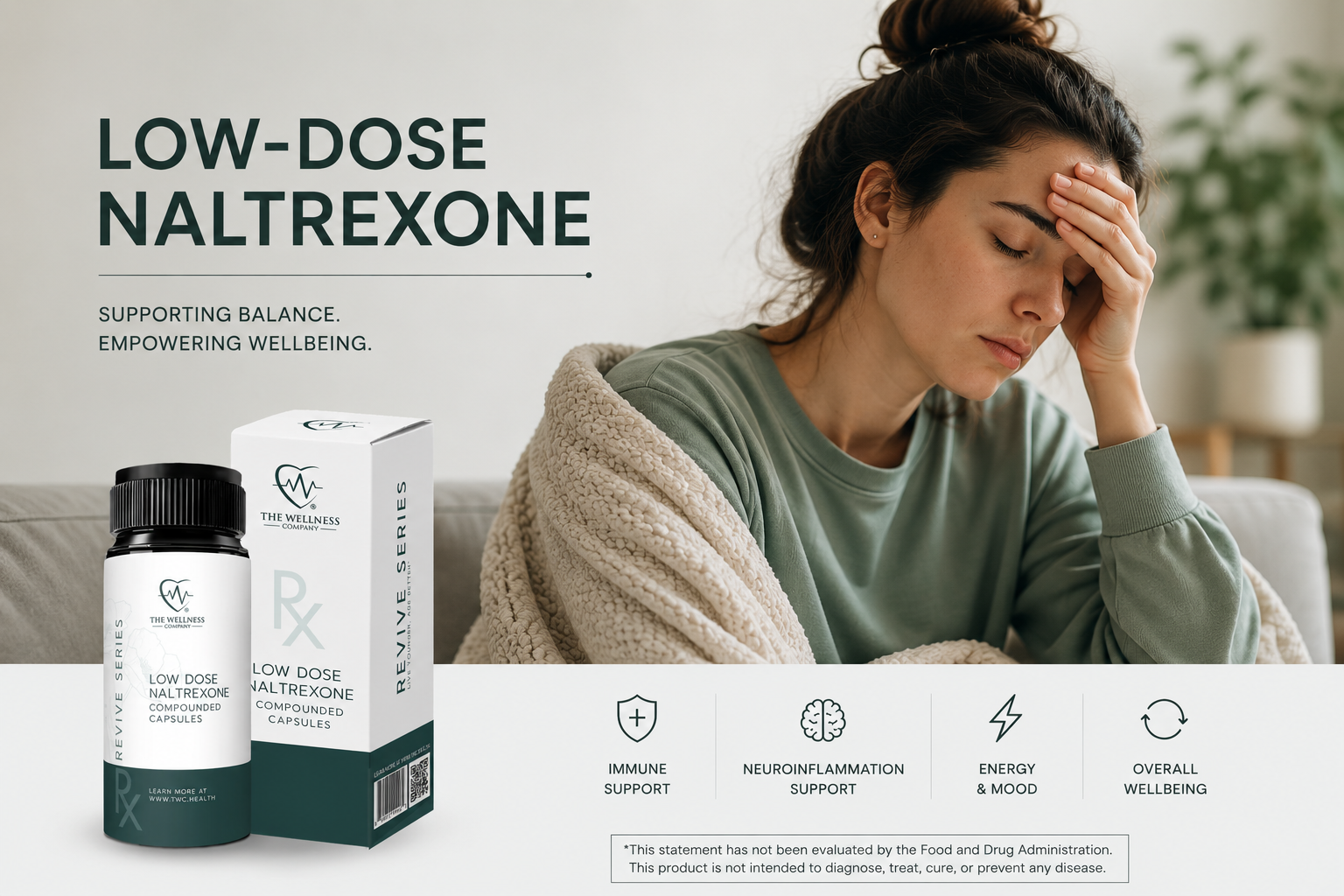
Low-Dose Naltrexone and Long COVID: What the Research Shows
An estimated 20 million people are struggling with the lingering effects of COVID-19 — from the virus itself and, for many, from the vaccine. Debilitating fatigue, brain fog, and muscle and joint pain can persist for months or even years after the initial infection, and treatments remain frustratingly limited.
Emerging research is pointing to low-dose naltrexone (LDN) as a safe, well-tolerated option that may significantly improve these stubborn symptoms — through mechanisms that address the root drivers of long COVID rather than simply masking them.
What Is Low-Dose Naltrexone?
Naltrexone is an FDA-approved opioid antagonist traditionally prescribed at doses of 50–150 mg per day to treat opioid and alcohol dependence. At much lower doses — typically 4.5 mg per day or less — it behaves very differently in the body. Rather than fully blocking opioid receptors, LDN acts as a glial modulator and immune regulator, opening the door to therapeutic benefits for inflammatory and post-viral conditions like long COVID.1
How LDN Works
LDN's effectiveness against long COVID symptoms stems from several complementary mechanisms that together address the chronic immune dysregulation and neuroinflammation driving persistent symptoms:
Opioid Receptor Rebound
LDN briefly blocks opioid receptors for 4–6 hours, triggering a rebound that increases endorphin production and upregulates opioid receptors — helping regulate immune function and prevent chronic inflammation.1
Immune Modulation
LDN calms an overactive immune response by blocking TLR4 receptors on immune cells, reducing inflammatory signaling molecules — including a cytokine frequently elevated in long COVID.3
OGF Pathway Support
By temporarily blocking the opioid growth factor receptor, LDN prompts the body to produce more OGF — supporting healthy cell growth, tissue repair, and reduced inflammation critical for post-viral recovery.3,4
Glial Cell Modulation
At low doses, naltrexone influences the specialized cells that nourish and protect neurons, reducing brain inflammation — a key driver of the brain fog experienced in long COVID.2
What the Research Shows
A 2025 systematic review pooling the best available studies found that LDN often led to noticeable improvements in energy, mental clarity, and sleep quality for long COVID patients.1
A 2024 pilot study followed 36 individuals with ongoing, moderate-to-severe fatigue after COVID-19 who took 4.5 mg of LDN daily alongside NAD+ for 12 weeks. Fatigue scores improved significantly across both physical and mental measures. Over half of participants (52%) were classified as "responders," reporting meaningful gains in energy, daily activity, pain reduction, and emotional well-being.2
The Bottom Line
LDN is emerging as a multi-target therapy that addresses the root mechanisms of long COVID — chronic immune dysregulation and neuroinflammation — rather than simply managing symptoms. With a favorable safety profile, no serious adverse events in reviewed studies, and growing clinical evidence, it represents one of the most promising options currently available for the millions still living with long COVID.
References
- Du A, Nguyen ADK. Does Low-Dose Oral Naltrexone Alleviate Symptoms of Long COVID? A Systematic Review and Meta-Analysis. COVID. 2025;5(12):198.
- Isman A, et al. Low-dose naltrexone and NAD+ for the treatment of patients with persistent fatigue symptoms after COVID-19. Brain, Behavior & Immunity — Health. 2024;36:100733.
- Younger J, Parkitny L, McLain D. The use of low-dose naltrexone (LDN) as a novel anti-inflammatory treatment for chronic pain. Clinical Rheumatology. 2014;33(4):451–459.
- Cant R, Dalgleish AG, Allen RL. Naltrexone Inhibits IL-6 and TNFα Production in Human Immune Cell Subsets following Stimulation with Ligands for Intracellular Toll-Like Receptors. Frontiers in Immunology. 2017;8:809.
Author
These statements have not been evaluated by the Food and Drug Administration. This product is not intended to diagnose, treat, cure, or prevent any disease. This content is for educational and informational purposes only and is not intended as medical advice. Always consult a licensed healthcare provider before starting any new medication or treatment.