


View Featured Categories
The Perfect Pain Reliever Didn’t Exist — Until Now


Health & Wellness · Pain Management
Introducing RelieveRx: A Prescription-Strength, Non-Habit-Forming Approach to Pain Relief
Let's be honest: pain is inevitable, but the way we treat it is a choice grounded in evidence, not guesswork. The opioid crisis has made it unmistakably clear that narcotic painkillers carry a high potential for dependence, overdose, and serious long-term health harms — prompting stricter safety warnings and prescribing limits across the board.
An ideal pain reliever should be non-habit-forming with no significant risk of dependence, rapid in onset, and well tolerated with a low incidence of systemic side effects. For years, that standard seemed out of reach. Now, after more than a year of focused research and development, the physicians at The Wellness Company have engineered a next-generation solution.
Introducing RelieveRx
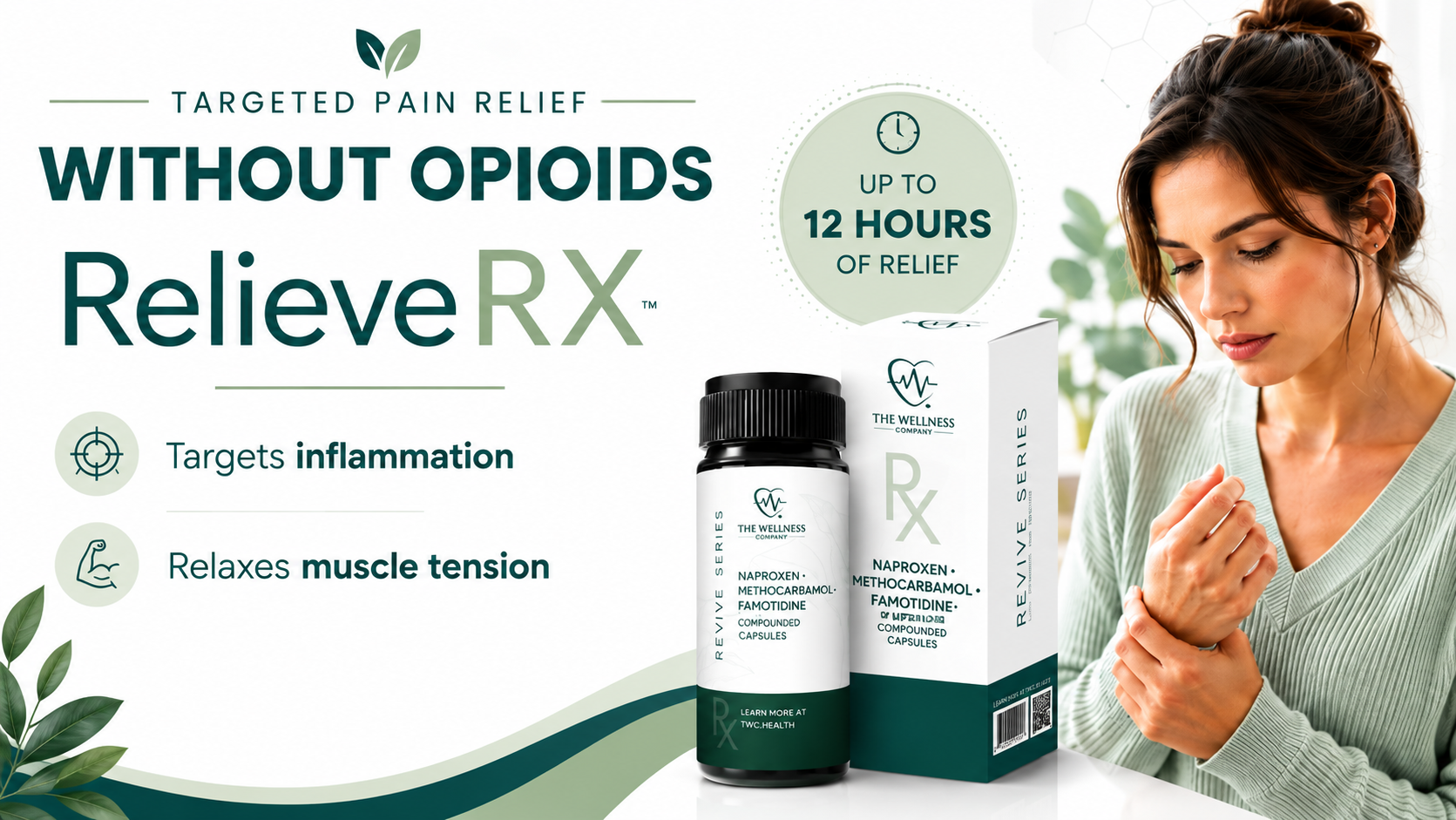
RelieveRx is a prescription-only, targeted, modern approach to pain relief designed to align with today's higher safety and efficacy expectations. This long-acting, prescription-strength four-in-one formula works by calming inflammation, relaxing muscle spasms, and protecting the stomach from the gastrointestinal distress commonly caused by NSAIDs.
Naproxen 330mg
Delivers long-lasting anti-inflammatory relief, reducing swelling and tissue irritation for up to 12 hours.1
Methocarbamol 300mg
Relaxes muscle spasms that often amplify pain and restrict movement.2
Famotidine 10mg
Provides gastrointestinal protection, reducing heartburn and stomach discomfort commonly associated with NSAID use.3
Caffeine 60mg
Enhances the effectiveness and onset of pain relief while counteracting the drowsiness often associated with muscle relaxants.4
Why Chronic Pain Demands a Serious Response
Whether it comes from years of physical labor, desk work, or a sports injury, chronic pain affects nearly everyone at some point — and its health consequences extend well beyond discomfort.
The Downstream Effects of Untreated Chronic Pain
- Persistent pain keeps the body in a chronic stress response, increasing risk of hypertension, heart disease, and autoimmune conditions5,6
- Immune and endocrine dysfunction from chronic pain can worsen control of other conditions, including diabetes5
- Reduced movement leads to muscle weakness, joint stiffness, and functional decline — difficulty walking, lifting, and performing daily tasks5,6
- Significantly increases risk of depression, anxiety, sleep disturbance, and cognitive impairment — including reduced attention span, memory, and processing speed7
The Bottom Line
Effective pain management doesn't have to come with the risks of opioid dependence or the GI damage of traditional NSAIDs. RelieveRx represents a thoughtfully engineered alternative — combining proven ingredients that work together to address pain at multiple levels, without the safety trade-offs that have defined pain treatment for too long.
Important Safety Information
Do not take if pregnant, breastfeeding, or if you have kidney, liver, or cardiac dysfunction, or any bleeding disorders. Do not take with sedatives, opiates, blood thinners, muscle relaxants, or other NSAIDs. Consult with a medical provider for additional information.
References
- Drugs.com. Naproxen. https://www.drugs.com/search.php?searchterm=naproxen
- Drugs.com. Methocarbamol. https://www.drugs.com/search.php?searchterm=Methocarbamol
- Drugs.com. Famotidine. https://www.drugs.com/search.php?searchterm=famotidine
- Baratloo A, et al. The Role of Caffeine in Pain Management: A Brief Literature Review. Anesthesiology and Pain Medicine. 2016;6(3):e33193.
- Nunez SG, et al. Chronic Stress and Autoimmunity: The Role of HPA Axis and Cortisol Dysregulation. International Journal of Molecular Sciences. 2025;26(20):9994.
- Saccò M, et al. The relationship between blood pressure and pain. Journal of Clinical Hypertension. 2013;15(8):600–605.
- Chen J, Wang X, Xu Z. The Relationship Between Chronic Pain and Cognitive Impairment in the Elderly. Journal of Pain Research. 2023;16:2309–2319.
These statements have not been evaluated by the Food and Drug Administration. This product is not intended to diagnose, treat, cure, or prevent any disease. This content is for educational and informational purposes only and is not intended as medical advice. RelieveRx is a prescription product. Always consult a licensed healthcare provider before starting any new medication or treatment.