


View Featured Categories
Hantavirus: What You Need to Know


Health Awareness · Outbreak BriefinG
Since the onset of the hantavirus outbreak on the cruise ship MV Hondius, which resulted in three deaths, rumors have circulated that this could be the next pandemic. In some ways, it does look similar to the start of the COVID-19 pandemic. In other ways, it is very different.
Just as tabletop exercises on a novel coronavirus took place months before the COVID-19 pandemic, the World Health Organization (WHO) hosted a worldwide pandemic preparedness exercise—involving 26 countries, 600 emergency experts, and more than 25 global health agencies—just two weeks before the hantavirus outbreak.
However, the similarities stop there. Coronavirus has a mortality rate of around 1% and is highly contagious. Hantavirus has a mortality rate of up to 60%, and person-to-person transmission is rare — at least, that is what we are currently being told.
"The proximity of passengers, both on deck and in cabins, makes it easy for aerosolized particles to be distributed via person-to-person contact and through ventilation ducts."
— Dr. Peter McCullough, Chief Scientific Officer, TWC HealthWhat Is Hantavirus?
Hantavirus belongs to the Hantaviridae family and is carried by rodents—mice, rats, and voles—without making the animals themselves sick. There are two main forms of human disease caused by these viruses, each with a distinct geography and clinical pattern.
Two Main Types
- Hantavirus Pulmonary Syndrome (HPS/HCPS): Mostly found in the Americas; attacks the lungs and heart.
- Hemorrhagic Fever with Renal Syndrome (HFRS): Mostly found in Europe and Asia; causes kidney failure.
Symptoms and Progression
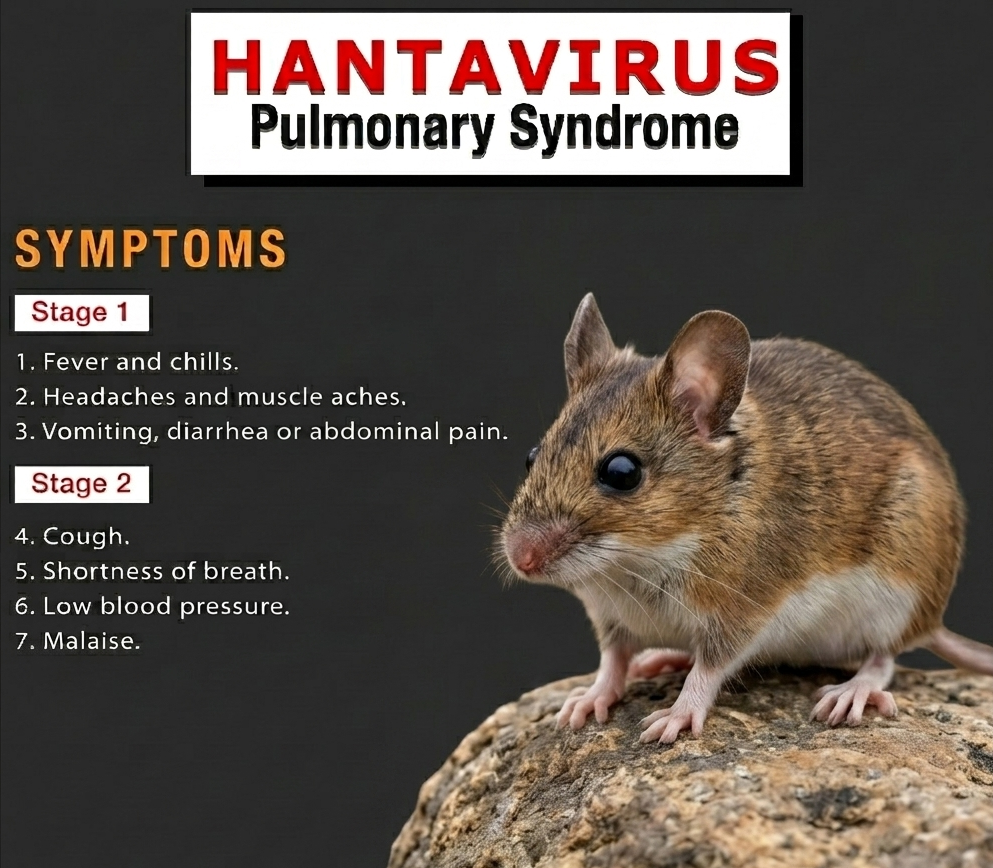
Initial flu-like symptoms appear one to eight weeks after exposure, then rapidly progress to pulmonary capillary leakage — leading to respiratory failure, low blood pressure, and fluid buildup in the lungs and chest cavity. The final phase is recovery or death, and breathing difficulties for survivors can persist for two years.
Early Warning Signs
- Fever and chills
- Muscle aches
- Headache
- Rapid progression to shortness of breath and respiratory distress
How It Spreads
Airborne hantavirus particles from rodent droppings spread to humans through inhalation. In the United States, infections are usually found in arid climates—the Western and Southwestern states—because lower humidity allows the particles to become airborne. Human-to-human transmission has historically been considered very rare.
Treatment Options
There is no vaccine or specific antiviral cure for hantavirus. Treatment is supportive and centered on stabilizing breathing and circulation in an intensive care setting, including oxygen therapy and, in severe cases, extracorporeal membrane oxygenation (ECMO).
Hantavirus Is Rare
As of the end of 2023, only 890 cases of hantavirus disease had been reported in the United States since surveillance began in 1993. The disease remains uncommon, but the high mortality rate and rapid progression make awareness and prevention essential, particularly for travelers.
The MV Hondius Outbreak: WHO Update
According to the World Health Organization, the confirmed species of hantavirus on the cruise ship is the Andes strain—mostly found in Argentina and Chile—and is the only strain known to be capable of human-to-human transmission. The virus was likely introduced via wildlife contact in South America before the ship's April 1 departure.
Outbreak Snapshot
- Total cases: 8 identified (5 confirmed, 3 suspected)
- Fatalities: 3 passengers (a Dutch couple and a German citizen)
- Medical status: One patient is in critical condition in South Africa; others have been medically evacuated or are being monitored
- Ship status: The MV Hondius is enroute to the Canary Islands for evaluation of remaining passengers
- U.S. exposure: 17 Americans are on board; the CDC is tracking potential exposures
- Monitoring: Active in the U.S., Switzerland, and the Netherlands
- WHO risk assessment: Risk to the general population is currently considered low (subject to change)
Only one prior outbreak of confirmed human-to-human transmission has been documented — at a birthday party of 100 guests, which resulted in 34 cases and 11 deaths. Investigations into possible person-to-person spread aboard the MV Hondius remain ongoing.
Dr. Peter McCullough's Protocols
Dr. McCullough notes that the close quarters of cruise ships — both on deck and in cabins — make it easy for aerosolized particles to spread person-to-person and through ventilation ducts. He recommends a layered, low-cost prevention strategy for travelers and crew.
Surface Decontamination
Use wet, alcohol-based wipes consistently on bathroom fixtures, air vents, and luggage areas. Avoid sweeping or vacuuming, which can re-aerosolize particles.
Respiratory Protection
In older or maintenance areas of ships, wear a NIOSH-approved N95 mask. N95s capture small viral particulates that pass through standard surgical masks.
Nasal & Throat Hygiene
Routine gargles and nasal irrigation with saline or dilute povidone-iodine solution can clear viral particles from the upper respiratory tract before they take hold.
Prophylactic Pharmaceuticals
Tamiflu: While primarily used for influenza, some clinicians hypothesize that, due to its broad-spectrum potential, it may offer relief if used early in a viral outbreak.
Ivermectin and hydroxychloroquine: Both compounds have antiviral and immune-modulating properties. Independent analyses suggest that, because of their ability to inhibit viral entry and modulate inflammation, they warrant serious consideration. If used as prophylaxis, both medications should be taken with caution and ideally under the guidance of a medical professional.
The hard truth of the cruise ship hantavirus outbreak is that too little was done too late. Being proactive before you board — with alcohol wipes, nasal and throat sprays, gargles, and possible prophylactic medications — can offer peace of mind and may keep you out of the hospital.

Key Takeaway
Hantavirus is rare, but the Andes strain's potential for person-to-person transmission and a mortality rate of up to 60% make preparation worthwhile — especially for travelers in shared, enclosed environments. Layer your defenses: surface decontamination, an N95 in high-risk spaces, nasal and throat hygiene, and a medical preparedness kit on hand before you depart.
For more cutting-edge research and up-to-date information, visit Dr. McCullough's Substack, Focal Points.
References
- COVID-19 pandemic death rates by country. (2020, October 10). Wikipedia. https://en.wikipedia.org/wiki/COVID-19_pandemic_death_rates_by_country
- Hantavirus cluster linked to cruise ship travel, Multi-country. (2024). World Health Organization. https://www.who.int/emergencies/disease-outbreak-news/item/2026-DON599
- CDC. (2024, June 26). Reported Cases of Hantavirus Disease. https://www.cdc.gov/hantavirus/data-research/cases/index.html
- Wikipedia Contributors. (2019, November 24). Hantavirus pulmonary syndrome. Wikipedia; Wikimedia Foundation. https://en.wikipedia.org/wiki/Hantavirus_pulmonary_syndrome
- Alpañes, E. (2026, May 7). Andes hantavirus: Deadly 2018 outbreak shows it is not only transmitted through close contact. EL PAÍS English. https://english.elpais.com/health/2026-05-07/andes-hantavirus-deadly-2018-outbreak-shows-it-is-not-only-transmitted-through-close-contact.html
Author
This article is for informational and educational purposes only and is not a substitute for professional medical advice, diagnosis, or treatment. Always consult a qualified healthcare provider before starting, stopping, or changing any medication or treatment plan, including the use of prescription medications such as ivermectin or hydroxychloroquine. The views expressed do not necessarily reflect those of any cited public health agency.


