


View Featured Categories
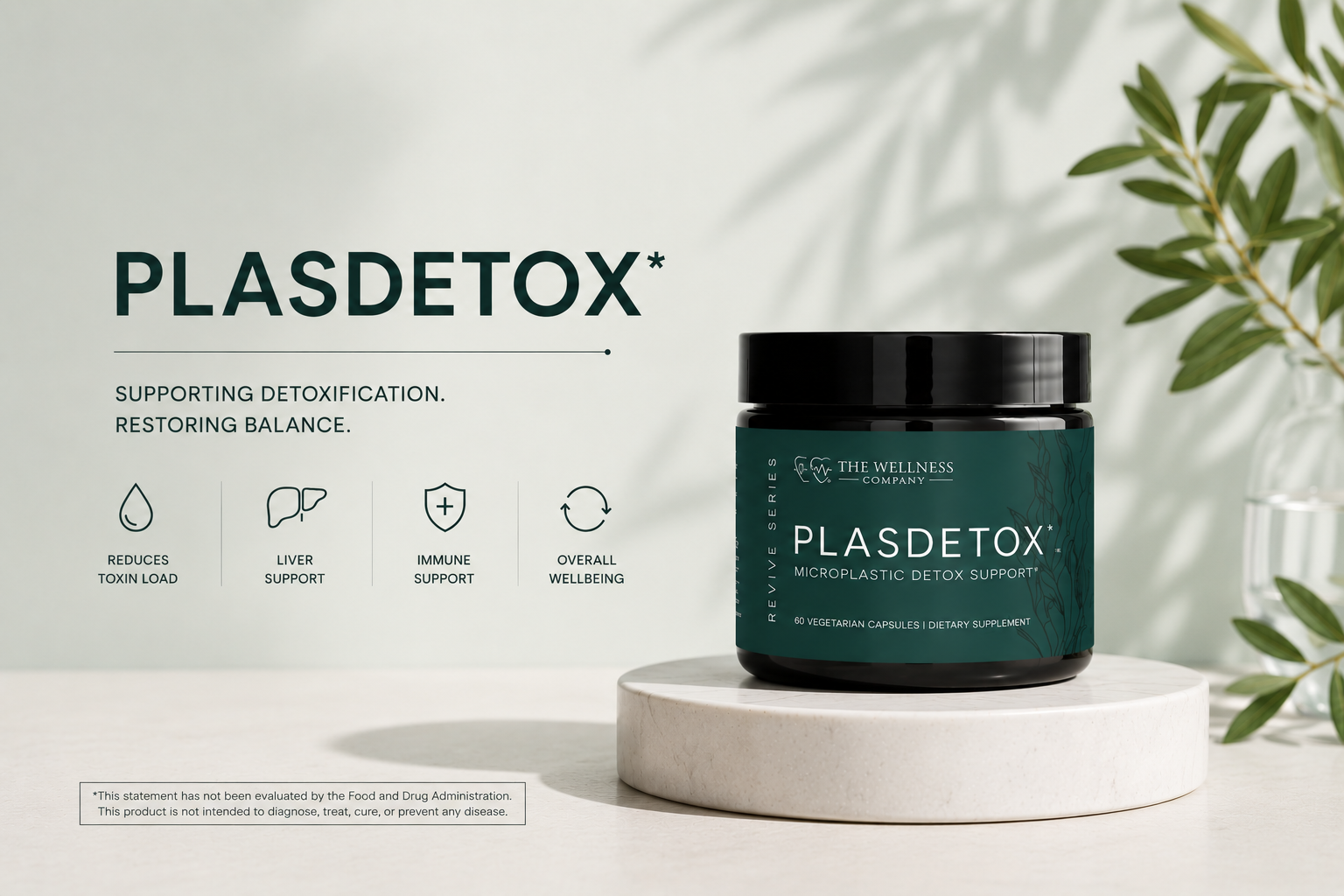
Plasdetox™ is The Answer to the Plastic Revolution


Health & Wellness · Detox Support
Microplastics Are Inside Your Body — Here's What Science Says About Getting Them Out
Microplastics are no longer just an environmental concern — they are a biological reality. Research shows these tiny particles, often carrying toxic additives like Bisphenol A (BPA), have been found throughout the human body, from the bloodstream to vital organs. And the sources are more widespread than most people realize.
While water bottles are a well-known culprit, even "healthy" staples such as fruits and vegetables, along with salt, sugar, and honey, contribute to total microplastic consumption.1 Fortunately, emerging studies suggest that specific natural compounds and probiotics may help bind and flush these "forever" particles from our systems.
Signs of Plastic Accumulation
- Gastrointestinal distress — Chronic bloating, abdominal pain, and alterations in gut microbiome balance are among the most frequently reported signs of high exposure.2
- Elevated inflammatory markers — Research consistently links plastic accumulation to elevated CRP and IL-6, indicating the body is in a constant state of immune defense.2
- Metabolic and endocrine changes — Plastics often mimic hormones, leading to imbalances in thyroid or cortisol levels and potentially contributing to heart disease.2
The Bio-Binders: Chlorella and Probiotics
One of the most effective ways to remove microplastics is to intercept them before they cross from the gut into the bloodstream. Chlorella, a nutrient-dense freshwater algae, acts as a biosorbent. Its tough cell wall contains specialized fibers that naturally attract and latch onto plastic particles and heavy metals in the digestive tract. Once bound to chlorella, these plastics are safely carried out of the body through normal waste.3,4
Probiotics such as Bifidobacterium longum and Lactobacillus rhamnosus work in a similar way. Their cell walls — made up of peptidoglycan and polysaccharides — can physically trap microplastics. In recent animal studies, specific probiotic strains increased the excretion rate of polystyrene particles by more than 30%, significantly reducing the amount of plastic remaining in the intestines.5,6
The Chemical Flush: Calcium Glucarate and Lycopene
Microplastics often act as "Trojan horses" for chemical disruptors. When plastic particles sit in the gut, they can release endocrine-disrupting chemicals like BPA. This is where Calcium Glucarate becomes essential — it supports a liver process called glucuronidation, which identifies these plastic-derived toxins and prepares them for elimination. By inhibiting an enzyme that would otherwise allow these toxins to be reabsorbed, Calcium Glucarate ensures they are successfully flushed out.7,8,9
Lycopene, the powerful antioxidant found in tomatoes, provides a second layer of defense. Microplastics cause oxidative stress — a form of cellular damage — within the liver and kidneys. Research indicates that Lycopene not only helps reduce the physical presence of microplastics in gut models but also neutralizes the inflammation and cellular damage they leave behind.10
Strengthening the Gut Barrier: S. boulardii
The final piece of the puzzle is preventing "leaky gut," which allows microplastics to migrate into the bloodstream. Saccharomyces boulardii, a beneficial yeast, is known for its ability to strengthen the intestinal barrier. By improving the tight junctions between gut cells, S. boulardii helps ensure that microplastics stay in the digestive tract — where they can be bound by chlorella and probiotics — rather than leaking into the rest of the body.11
Chlorella
Binds microplastics and heavy metals in the digestive tract and carries them safely out of the body.
Probiotics
Cell wall structures physically trap microplastics and increase excretion rates by over 30% in studies.
Calcium Glucarate
Supports liver glucuronidation to prepare plastic-derived toxins like BPA for elimination.
Lycopene
Neutralizes oxidative stress and cellular damage caused by microplastic accumulation in the liver and kidneys.
S. boulardii
Strengthens tight junctions in the gut lining to prevent microplastics from migrating into the bloodstream.
The Bottom Line
Microplastic exposure is unavoidable in modern life — but accumulation is not inevitable. The emerging science points to a multi-pathway approach: binding particles in the gut with chlorella and probiotics, flushing chemical disruptors through liver support, neutralizing oxidative damage with antioxidants, and sealing the gut barrier against systemic migration. Addressing all five pathways simultaneously offers the most comprehensive defense available today.
References
- Hayder M, Laan MM, van Wezel AP. Exposure to microplastics from food: Comparative analysis of food types and quantification techniques. Journal of Hazardous Materials. 2026;501:140657.
- Ririe AK, et al. Impact of Microplastic Exposure on Human Health: A Systematic Review of Mechanisms, Biomarkers, and Clinical Outcomes. Cureus. 2025;17(12):e100295.
- Morosini C, et al. Pharmaceuticals in the aquatic environment: A review on eco-toxicity and self-purification of freshwater systems. Environmental Sciences Europe. 2022;34:75.
- Wang C, et al. Dynamic responses and adsorption mechanisms of Chlamydomonas reinhardtii extracellular polymeric substances to different metals. Environmental Pollution. 2025.
- Rong X, et al. Novel probiotics adsorbing and excreting microplastics in vivo show strain-specific protection. Frontiers in Microbiology. 2025;15:1522794.
- Teng X, Zhang T, Rao C. Novel probiotics adsorbing and excreting microplastics in vivo show potential gut health benefits. Frontiers in Microbiology. 2025;15:1522794.
- Alvarez-Muñoz D, et al. Desorption of bisphenol A from microplastics under simulated environmental conditions. Frontiers in Marine Science. 2023;10:1195964.
- Li X, et al. Combined exposure of polystyrene microplastics and benzo[a]pyrene in rats: Oxidative stress effects in the liver. Ecotoxicology and Environmental Safety. 2024;274:115349.
- Li Y, et al. Exploring the impact of polystyrene microplastics on human health. Toxics. 2024;12(4):322.
- Zhang H, Wang J, Chen L, Zhao Y. The role of lycopene in alleviating nanoplastic-induced liver inflammation and steatosis. Food and Energy Security. 2024;13(2).
- McFarland LV. Beneficial effects of Saccharomyces boulardii CNCM I-745 on intestinal barrier function. Therapeutic Advances in Gastroenterology. 2019;12:1–19.
Author
These statements have not been evaluated by the Food and Drug Administration. This product is not intended to diagnose, treat, cure, or prevent any disease. This content is for educational and informational purposes only and is not intended as medical advice. Always consult a licensed healthcare provider regarding any medical concerns.


