


View Featured Categories
Is NAC Safe to Take Daily for Liver Support?


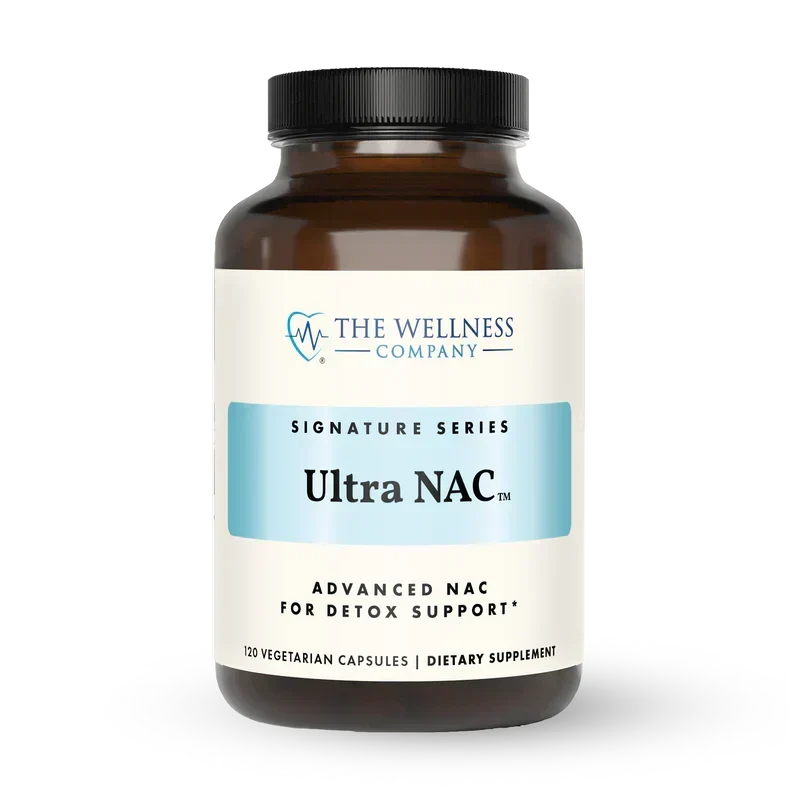
Liver Health · Detox Support
Medically reviewed by TWC Editorial Team
Yes — N-acetylcysteine (NAC) has been used in hospitals for over 60 years as the standard antidote for acetaminophen poisoning, and oral doses up to 1,800 mg daily have been studied in humans for periods exceeding two years without serious adverse events. The main considerations are timing around meals, occasional GI upset, and avoiding it within 48 hours of nitroglycerin medications.
You have heard NAC called a "spike detox cofactor." You have also seen the FDA's confusing back-and-forth about whether it can be sold as a supplement. You want a straight answer about taking it every day. Here it is.
What does NAC do for the liver?
NAC is a precursor to glutathione, the master antioxidant your liver uses to neutralize toxins, drugs, and metabolic byproducts. When glutathione is depleted — by alcohol, acetaminophen, environmental toxins, or chronic illness — your liver cells become more vulnerable to oxidative damage. Supplementing with NAC restores glutathione production.
Your liver makes glutathione constantly, but the pace at which it can produce new glutathione is limited by the availability of cysteine — and cysteine is the rate-limiting amino acid. NAC delivers a stable, absorbable form of cysteine directly to the liver. A 2017 review in Pharmacology & Toxicology (PMC5241507) summarized over 100 human studies and found NAC consistently raised intracellular glutathione across multiple tissues.
This is why hospitals use IV NAC as the standard of care for Tylenol overdose: when your liver runs out of glutathione, hepatocytes die rapidly. NAC stops the cascade.
Is it safe to take NAC every day?
Daily oral NAC at 600–1,800 mg has been studied in humans for chronic obstructive pulmonary disease, polycystic ovary syndrome, fatty liver, and post-viral recovery for periods up to two years without significant adverse signals beyond mild GI upset.
The side-effect profile is unusually clean for a supplement with this much downstream effect. The most common complaint is a sulfurous taste (the cysteine smell). The most clinically meaningful interaction is with nitroglycerin — NAC can amplify nitroglycerin's vasodilatory effect, so people taking nitrates for chest pain should not take NAC without their cardiologist's input.
Pregnant women, people on immunosuppressants, and those with active asthma should consult a clinician before starting.
What about the FDA's stance?
In 2020 the FDA briefly stated that NAC could not be sold as a supplement because it had been approved as a drug first. Industry groups challenged this. By 2022 the FDA exercised enforcement discretion, allowing continued OTC sale. NAC remains widely available in supplement form and is included in clinician-formulated protocols.
How much NAC do you need for daily liver support?
Standard daily NAC for liver support is 600–1,200 mg, typically split into two doses with food. For active spike-detox protocols, doses up to 1,800 mg may be used short-term, often paired with bromelain to enhance synergistic effects on glycoprotein structures.
Dosing guide:
- Daily liver support: 600–1,200 mg split into two doses, taken with food
- Active spike-detox protocol: up to 1,800 mg short-term, paired with bromelain
- Half-life note: ~6 hours — split dosing keeps glutathione production steady
Why "with food" for NAC but "empty stomach" for nattokinase? Different mechanism. NAC is a precursor that must be processed by liver cells — food slightly slows but does not prevent absorption, and reduces GI upset. Nattokinase needs to enter circulation as an active enzyme, which requires fasting conditions.
How Ultimate Spike Detox Fits In
Step 1
Understand that NAC supports glutathione — the liver's primary detox molecule — by supplying the rate-limiting amino acid cysteine.
Step 2
Use 600–1,200 mg daily with food — split dosing maintains steady glutathione production throughout the day.
Step 3
Stack with Ultimate Spike Detox — its selenium activates glutathione peroxidase, amplifying the antioxidant protection NAC builds.

Frequently Asked Questions
Can I take NAC and nattokinase together?
Yes. They work through different mechanisms. The BromAc study (PMC7999995) showed NAC's disulfide-bond reduction is synergistic with bromelain's protease activity on the spike protein.
Does NAC interfere with COVID vaccines or boosters?
There is no evidence NAC affects vaccine-induced immune memory. NAC may transiently reduce the inflammation associated with vaccination but does not erase antibody or T-cell responses.
How long until I notice anything?
For oxidative stress and energy effects, 2–4 weeks. For inflammatory markers, 6–8 weeks. NAC works at the cellular level — it is not a stimulant.
Is the sulfur smell normal?
Yes. The sulfur-containing structure causes a faint smell. It is not a sign of spoilage.
Get Started Today
NAC is one of the most-studied and best-tolerated supplements in modern medicine. At 600–1,200 mg daily, it supports your liver's natural detoxification work — and amplifies the spike-detox protocol when paired with nattokinase and bromelain.
Learn MoreReferences
- Mokhtari, V., et al. (2017). A Review on Various Uses of N-Acetyl Cysteine. Cell Journal. pmc.ncbi.nlm.nih.gov/articles/PMC5241507
- Aldini, G., et al. (2018). N-Acetylcysteine as an antioxidant and disulphide breaking agent. Free Radical Research. pubmed.ncbi.nlm.nih.gov/29327986
- Horowitz, R.I., et al. (2021). Efficacy of glutathione therapy in relieving dyspnea associated with COVID-19 pneumonia. Respiratory Medicine Case Reports. pmc.ncbi.nlm.nih.gov/articles/PMC7831139
- Annexy, M., et al. (2021). BromAc synergistically inactivates SARS-CoV-2. Antiviral Research. pmc.ncbi.nlm.nih.gov/articles/PMC7999995
Author
Works alongside our network of US-licensed clinicians and the McCullough Foundation research team.
This article is for informational purposes only and is not a substitute for professional medical advice, diagnosis, or treatment. Always seek the advice of a qualified healthcare provider with any questions you may have regarding a medical condition.


