


View Featured Categories
For Naturally Healthy Skin: Tallow, Olive Oil, and Essential Oils


Skin Care · Natural Ingredients
Recently, interest in naturally sourced skin-care products has surged. As consumers look for alternatives to products containing long lists of synthetic ingredients and additives, traditional ingredients are making a comeback.
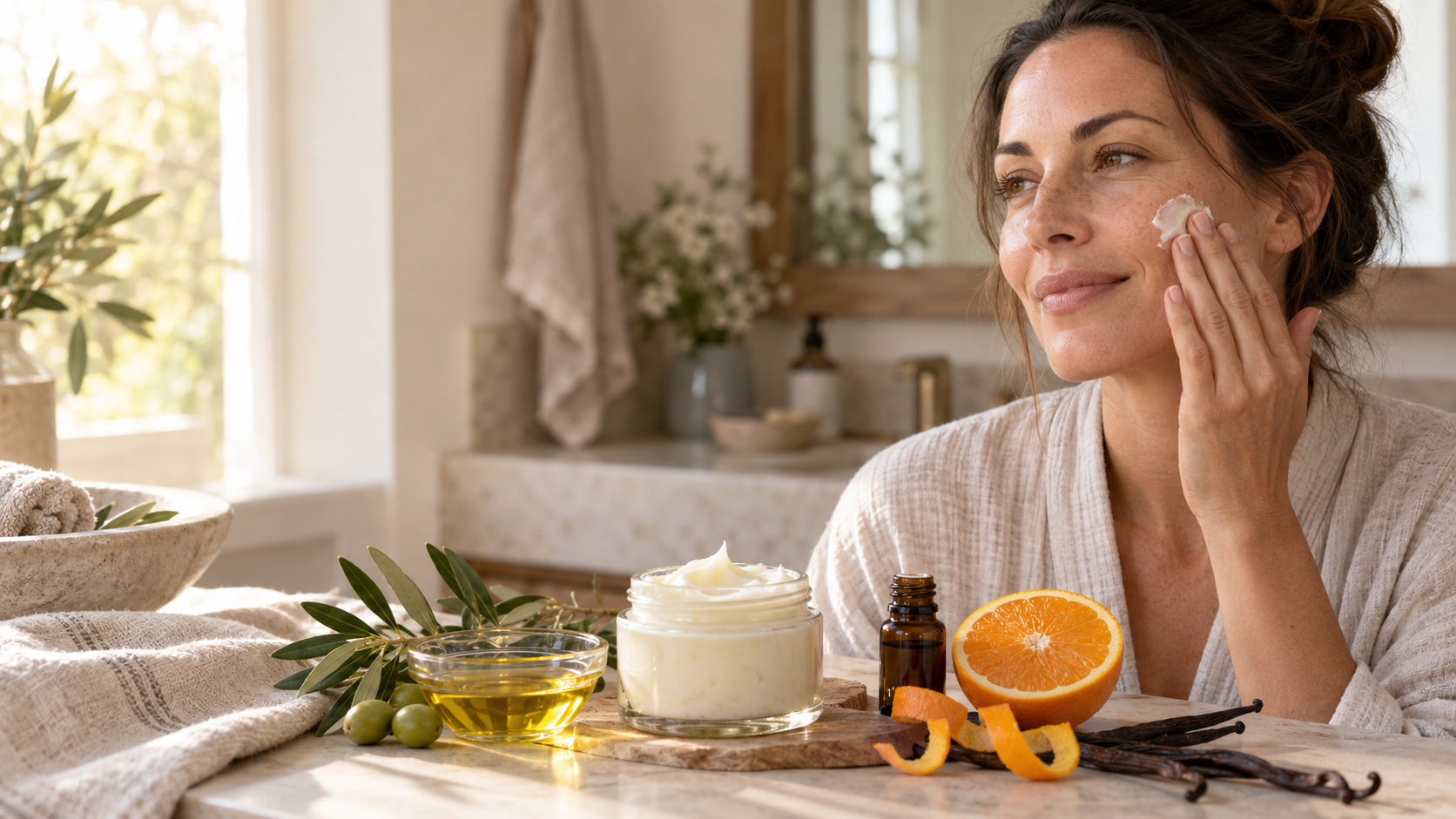
Two natural ingredients that have attracted considerable attention are beef tallow and essential oils. Although these ingredients come from very different sources, both have potential skin benefits — tallow is a concentrated source of fats that can help moisturize the skin and support its protective barrier, while certain essential oils contain plant compounds that have demonstrated antioxidant, anti-inflammatory, or antimicrobial activity in laboratory and experimental studies. Understanding how these ingredients interact with the skin can help consumers make informed choices about natural skin care.
How Tallow and Essential Oils Interact With the Skin
Think of your skin's outer layer as a brick wall protecting your body. The bricks are largely made up of dead skin cells, while natural fats — including ceramides, cholesterol, and fatty acids — act like the mortar holding everything together. This protective barrier helps keep moisture inside the skin and unwanted substances outside while controlling how certain substances move through the outer layer of skin. (1)
When the skin barrier becomes damaged or excessively dry, moisture can escape more easily. This can contribute to dryness, irritation, roughness, and sensitivity. Moisturizers containing fats and oils can improve the skin's feel and support the barrier by reducing water loss — one reason naturally derived fats such as beef tallow and plant oils have become popular ingredients in skin-care products.
Beef Tallow: Why Is It So Popular?
As consumers turn toward traditionally sourced ingredients, beef tallow has resurfaced as a popular skin-care ingredient. Beef tallow is rendered beef fat and is composed primarily of fatty acids. Because some of the fatty acids found in tallow are also naturally present in the skin, tallow can function as an occlusive and emollient moisturizer — in simple terms, it can soften the skin and help reduce moisture loss. This is the same fatty-acid profile behind formulas like Whipped Tallow Cream, which is built around rendered tallow as its base moisturizing ingredient.
However, don't assume tallow will work the same way for everyone or every skin type. Skin-care products can affect individuals differently, and factors such as formulation, concentration, skin type, and existing skin conditions can influence the results.
The Fatty Acid Complex in Tallow (2)
- Stearic acid and palmitic acid: Found in both beef tallow and human skin. They may contribute to tallow's moisturizing and barrier-supporting properties when used as a topical emollient.
- Oleic acid: Research on skin lipids suggests oleic acid can influence the organization and permeability of the skin barrier, so the amount and formulation may matter when considering its effects on the skin.
- Linoleic acid: An essential fatty acid that plays an important role in normal skin function and maintenance of the skin barrier.
Together, these fatty acids may help explain why tallow can leave dry skin feeling softer and more moisturized.
Does Tallow Have Antimicrobial Properties?
Another interesting area of research involves the potential antimicrobial properties of animal fats. One study found antimicrobial activity associated with beef fat against Listeria, a type of bacteria that can cause foodborne illness. (3) However, laboratory findings involving bacteria should not automatically be interpreted as proof that applying beef tallow to human skin will prevent or treat skin infections. More research is needed to determine whether the antimicrobial properties observed in experimental settings provide meaningful benefits when tallow is used as a cosmetic skin-care ingredient.
Extra Virgin Olive Oil and the Skin
Extra virgin olive oil is another naturally derived oil studied for its effects on the skin. Olive oil contains a variety of fatty acids and plant compounds, including antioxidant compounds that may contribute to its biological activity. Research suggests that olive oil has antioxidant, anti-inflammatory, and potentially skin-regenerative properties that may support the skin barrier and help moderate processes associated with skin inflammation. (4)
Because extra virgin olive oil contains numerous naturally occurring compounds, its effects are not simply related to its fat content — its antioxidant compounds are also of interest when researchers examine how olive oil interacts with skin. As with any topical oil, individual responses can vary. People with sensitive or easily irritated skin may want to introduce new products gradually and stop using them if irritation occurs.
Essential Oils and Skin
Essential oils are concentrated extracts obtained from plants. They contain numerous naturally occurring chemical compounds that can have biological activity, and some of these compounds have demonstrated antioxidant, anti-inflammatory, and antimicrobial effects in laboratory research. However, essential oils are highly concentrated and should not be applied directly to the skin without appropriate dilution.
Orange Essential Oil
Sweet orange oil (Citrus sinensis) is rich in the compound limonene. Laboratory and experimental studies have shown antioxidant and anti-inflammatory activity associated with orange essential oil, along with possible antimicrobial properties, which may help support healthy-looking skin. Proper dilution is especially important — citrus oils can also cause skin sensitivity in some cases. (5)
Vanilla Essential Oil
Research has demonstrated antioxidant and anti-inflammatory activity associated with vanilla and its naturally occurring compounds, suggesting it may help protect cells from oxidative stress and support processes involved in maintaining healthy skin. Vanilla is also commonly used in cosmetic products because of its pleasant aroma. (6)
Natural Skin Care Is Enjoying a Revival
Beef tallow, extra virgin olive oil, orange essential oil, and vanilla-derived ingredients all contain naturally occurring compounds that may have useful skin-care properties. Tallow provides fatty acids that can moisturize and support the skin barrier. Olive oil provides fatty acids and antioxidant compounds. Essential oils such as orange and vanilla contain plant compounds that researchers are studying for antioxidant, anti-inflammatory, and antimicrobial activity.
The key distinction is between what research has shown in the lab and what happens when these ingredients are used on human skin. Natural does not automatically mean risk-free, and more concentrated ingredients are not necessarily better. For consumers interested in natural skin care, the best approach is to consider ingredient quality, formulation, and how individual skin responds. Patch testing new topical products and using properly diluted essential oils can help reduce the risk of irritation.
Natural Ingredients, Individual Results
Natural skin care can be a genuinely useful part of a personal routine — but "natural" isn't a guarantee, and more concentrated isn't automatically better. Choosing trusted brands, checking formulation quality, and patch-testing new products are what actually determine whether tallow, olive oil, or an essential oil ends up helping your skin or irritating it.
Featured Product

Whipped Tallow Cream / Skin Barrier Support
Nature's Most Skin-Compatible Moisturizer
A non-greasy, deep-hydrating cream built on rendered beef tallow and rich in vitamins A, D, E, and K, formulated to restore skin barrier function and elasticity.*
Shop NowYou Might Also Be Interested In
References
- Russell MF, Sandhu M, Vail M, Haran C, Batool U, Leo J. Tallow, Rendered Animal Fat, and Its Biocompatibility With Skin: A Scoping Review. Cureus. 2024 May 24;16(5):e60981.
- Russell MF, Sandhu M, Vail M, Haran C, Batool U, Leo J. Tallow, Rendered Animal Fat, and Its Biocompatibility With Skin: A Scoping Review. Cureus. 2024 May 24;16(5):e60981.
- Chen YY, Kommadath A, Vahmani P, Visvalingam J, Dugan MER, Yang X. Transcriptome Analysis of Listeria monocytogenes Exposed to Beef Fat Reveals Antimicrobial and Pathogenicity Attenuation Mechanisms. Appl Environ Microbiol. 2021 Apr 13;87(9):e03027-20.
- Rubio-Santoyo A, Sanabria-de la Torre R, Montero-Vílchez T, Girón-Prieto MS, Gómez-Farto A, Arias-Santiago S. Effects of Extra Virgin Olive Oil and Petrolatum on Skin Barrier Function and Microtopography. J Clin Med. 2025 Jul 2;14(13):4675.
- El Hachlafi N, Elbouzidi A, Batbat A, Taibi M, Jeddi M, Addi M, Naceiri Mrabti H, Fikri-Benbrahim K. Chemical Composition and Assessment of the Anti-Inflammatory, Antioxidant, Cytotoxic and Skin Enzyme Inhibitory Activities of Citrus sinensis (L.) Osbeck Essential Oil and Its Major Compound Limonene. Pharmaceuticals (Basel). 2024 Dec 8;17(12):1652.
- Sinsuebpol C, Burapapadh K, Chowjaroen V, Changsan N. The radical scavenging activity of vanillin and its impact on the healing properties of wounds. J Adv Pharm Technol Res. 2023 Apr-Jun;14(2):99-104.
Author
This article is for general educational and informational purposes only and is not intended as medical advice. Individual skin reactions vary; patch test new products, dilute essential oils properly, and discontinue use and consult a healthcare provider if irritation occurs.


