


View Featured Categories
Understanding Breast Cancer


Women's Health · Oncology
Approximately 1 in 8 women in the US (13.1%) will be diagnosed with invasive breast cancer over the course of their lifetime. Of those diagnosed, roughly 1 in 43 (2.3%) will die from the disease. Despite decades of research and improving survival rates, breast cancer remains one of the most common and complex cancers affecting women worldwide.
Understanding how breast cancer develops, spreads, and can be treated — both through conventional and emerging therapies — is essential for every woman. From risk reduction to the latest diagnostic tools, knowledge is one of the most powerful tools in the fight against this disease.
Environment and lifestyle are the leading drivers of breast cancer. Only 5–10% of cases are linked to inherited gene mutations, most commonly BRCA1 and BRCA2 — meaning the majority of cases may be influenced by factors within our control.
How Breast Cancer Spreads and Types
Breast cancer can spread when cancer cells enter the blood or lymph system and travel to other parts of the body. The term invasive (or infiltrating) breast cancer describes any cancer that has grown into the surrounding breast tissue. There are several distinct types, each with different characteristics and treatment implications.
Types of Breast Cancer
- Invasive Ductal Carcinoma (IDC) — Up to 80% of invasive breast cancers. Starts in the milk ducts and invades the surrounding breast tissue.
- Invasive Lobular Carcinoma (ILC) — Up to 15% of cases. Begins in the lobules (milk-producing glands) and often presents as a thickening rather than a lump.
- Triple Negative Breast Cancer (TNBC) — An aggressive, fast-growing cancer that lacks receptors for estrogen, progesterone, and HER2, making it harder to treat.
- Inflammatory Breast Cancer (IBC) — Very rare (1–5% of cancers) and highly aggressive. Blocks lymph vessels in the skin, causing redness, swelling, and an orange-peel texture. No lump forms.
- Ductal Carcinoma In Situ (DCIS) — A pre-cancer that starts in a milk duct and has not yet grown into the rest of the breast tissue.
Causes and Risk Factors
Breast cancer results from DNA mutations that cause cells to multiply uncontrollably. While inherited mutations like BRCA1 and BRCA2 account for only 5–10% of cases, a wide range of environmental, hormonal, and lifestyle factors can significantly elevate risk.
Key Risk Factors
- Age: Risk increases with age; highest risk in women over 70. About 16% of cases are diagnosed under age 50. Breast cancer is rare under 40, though cases in younger women are rising.
- Hormones: Longer lifetime hormone exposure (menstruation before age 12 or menopause after 55) increases risk. A recent study identified 642 hormone-disrupting chemicals in everyday products such as pesticides, parabens, and phthalates.
- Dense Breasts: More connective tissue than fatty tissue makes mammograms harder to read and raises cancer risk.
- Chemical Exposure: A study identified 921 chemicals linked to breast cancer — 279 of which can induce mammary tumors — in food packaging, personal care products, single-use plastics, and some drugs.
- Microplastics: Have been found in significantly higher concentrations in breast cancer tissue compared to healthy tissue, causing oxidative stress and inflammation.
- Lifestyle Factors: Chronic stress, physical inactivity, obesity, smoking, alcohol consumption, poor diet, and poor sleep hygiene all contribute to increased risk.
- Prior Radiation: Radiation therapy to the chest during youth raises long-term risk.
- Males: Less than 1% of breast cancers occur in men.
Diagnosis
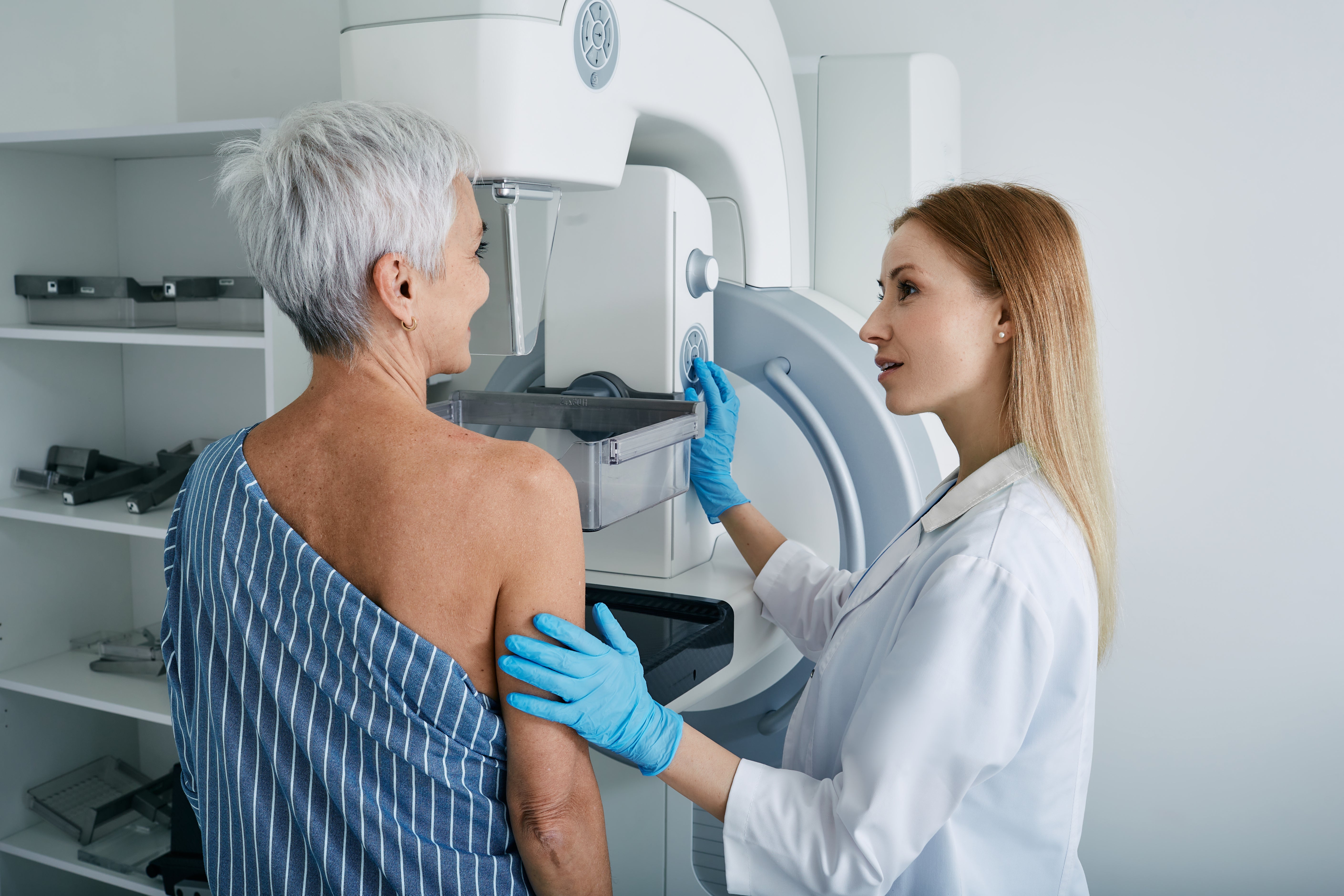
Early detection dramatically improves outcomes. Standard diagnostic pathways begin with a physical examination and patient history, followed by imaging and — if warranted — biopsy to confirm a cancer diagnosis.
Standard Imaging
Mammogram, ultrasound, and breast MRI are the most commonly used tools. CT, bone, and PET scans may also be used based on clinical findings.
Emerging Technologies
Abbreviated breast MRI, contrast-enhanced spectral mammography (CESM), PET/PEM scans, optical imaging, and electrical impedance tomography (EIT) are gaining traction in clinical settings.
Biopsy
Performed when imaging or examination findings are suspicious. The definitive method for confirming breast cancer diagnosis and determining type and stage.
Conventional Therapies
There are many forms and stages of breast cancer, and treatment is tailored accordingly. Therapy is broadly categorized as local (cancer confined to the breast) or systemic (cancer that has spread beyond the original site).
Local Treatment
Used when the tumor is confined to the breast. Includes surgery and radiation therapy.
Systemic Treatment
Used when cancer has migrated beyond the tumor site. Options include chemotherapy, targeted drug therapy, immunotherapy, and hormone therapy — though roughly 20% of hormone receptor-positive cancers do not respond to hormone therapy.
Non-Conventional Therapies: Antiparasitic Drugs Showing Promise
Always consult with your primary care physician and oncology team before taking any supplement or off-label drug, as these could affect the efficacy of your treatment or cause harm.
Two antiparasitic drugs — ivermectin and mebendazole — are currently drawing attention in cancer research circles for their potential activity against breast cancer. A study currently under preprint review titled "Real-World Clinical Outcomes of Ivermectin and Mebendazole in Cancer Patients" follows patients who self-reported promising results using a combined protocol over six months. Researchers also cite a 2025 case series reporting complete or near-complete remission in three patients with stage IV cancers — including breast, prostate, and melanoma — who self-administered fenbendazole, a closely related antiparasitic.
Ivermectin
A review in Pharmacological Research found that ivermectin may induce cancer cell death and inhibit the spread of breast cancer. The same research indicated that ivermectin improved the efficacy of tamoxifen, a common chemotherapy drug used in breast cancer treatment.
Mebendazole (MBZ)
A 2022 study in Breast Cancer Research found that MBZ shows particular promise against triple-negative breast cancer by inducing cancer cell death, inhibiting cell division, reducing tumor size, and preventing spread to the lungs and liver. It may also be especially beneficial in treating low-oxygen regions within tumors.
Common side effects for ivermectin include mild skin irritation, lightheadedness, low blood pressure, nausea, vomiting, and constipation. Both drugs can, like any medication, produce rare and more severe side effects or allergic reactions in some individuals. Always discuss use with a qualified healthcare provider before beginning any off-label protocol.
The Path Forward
Breast cancer is a challenging disease to detect and treat. It often presents with no symptoms and can be difficult to diagnose without imaging and biopsy. Having access to both conventional and emerging off-label therapies — and being empowered with accurate information — is essential for every woman navigating this diagnosis. Continued research into environmental exposures, lifestyle factors, and novel treatments offers genuine hope for improved outcomes in the years ahead.
References
- American Cancer Society. (2024). Breast cancer facts & figures 2024–2025. American Cancer Society.
- Breast Cancer Prevention Partners. (2026, January 20). Is there evidence that skin care products increase breast cancer risk? BCPP.
- Kay JE, Brody JG, Schwarzman M, Rudel RA. Application of the Key Characteristics Framework to identify potential breast carcinogens. Environ Health Perspect. 2024;132(1):17002.
- Anand P, et al. Cancer is a preventable disease that requires major lifestyle changes. Pharmaceutical Research. 2008;25(9):2097–2116.
- Tian Y, et al. Microplastics accumulated in breast cancer patients lead to mitophagy via ANXA2-mediated endocytosis. Environmental Pollution. 2025;364.
- American Cancer Society. Experimental breast imaging. cancer.org.
- UT Southwestern Medical Center. (2026, February 5). Study identifies why some breast cancers evade treatment. UT Southwestern Newsroom.
- Risch HA, McCullough PA, et al. Real-world clinical outcomes of ivermectin and mebendazole in cancer patients [Preprint]. Zenodo. 2026.
- Tang M, Hu X, et al. Ivermectin, a potential anticancer drug derived from an antiparasitic drug. Pharmacol Res. 2021;163:105207.
- Joe NS, et al. Mebendazole treatment disrupts the transcriptional activity of hypoxia-inducible factors 1 and 2 in breast cancer cells. Cancers. 2023;15(4):1330.
- Joe NS, Godet I, et al. Mebendazole prevents distant organ metastases in part by decreasing ITGβ4 expression and cancer stemness. Breast Cancer Res. 2022;24(1):98.
Author
This content is for informational purposes only and does not constitute medical advice. Always consult a qualified healthcare provider before making changes to your treatment plan or beginning any new therapy, including off-label or supplement-based protocols.


