


View Featured Categories
Prostate Cancer Rates Are Rising in Younger Men


Men's Health · Cancer Awareness
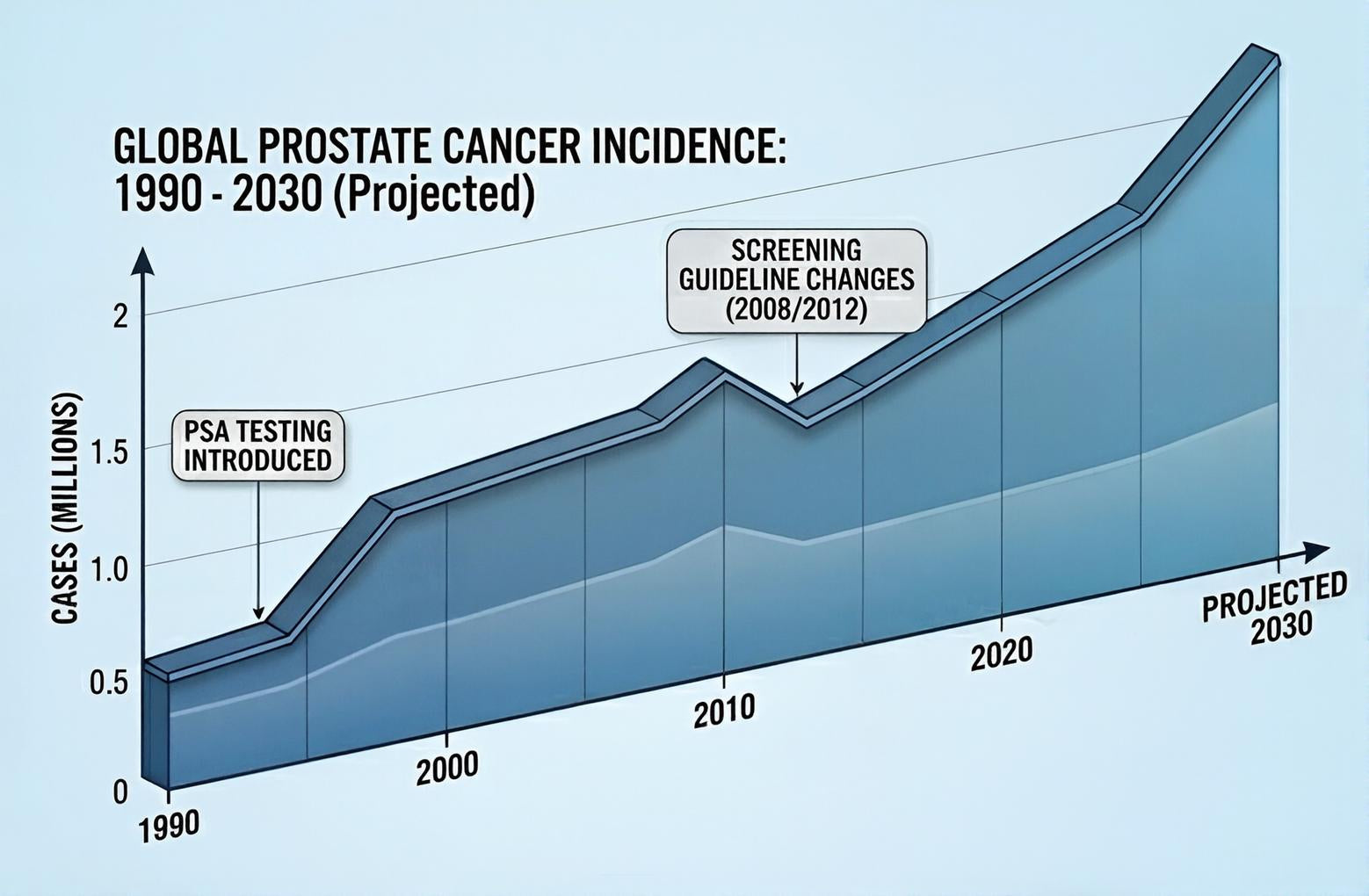
Odds are that you or someone you know is dealing with prostate cancer. The explosion of prostate cancer cases in recent history is unprecedented — and the trend is moving in the wrong direction for younger men. When seeking answers, there are many therapies, both conventional and natural, with proven records of addressing the disease. Many conventional treatments, however, come with severe side effects.
On the other side of the spectrum are natural and repurposed drugs that have been tested with mixed results. Well-meaning advice from friends — and Dr. Google — can often delay treatments that could actually work. Each man's cancer journey is unique, and finding accurate, research-backed information to make sound decisions about repurposed drugs is a maze altogether.
Seeking out treatment on your own can prove dangerous, and in some cases fatal. Always work with a qualified care practitioner who understands the role repurposed drugs and other therapies play in the fight against cancer.
"Every cancer patient should have the opportunity to explore repurposed drugs backed by research and known for their mild side effects."
— Brooke Lounsbury, AuthorUnderstanding the Risk
Prostate cancer is the second most common cancer in men (after skin cancer) and the fifth leading cause of death among men. While it has historically been associated with older age, the annual rate of advanced prostate cancer in men younger than 55 is rising — a deeply concerning trend that demands attention.
Known Risk Factors
- Age over 50 — though advanced cancer in those under 50 is increasing
- Family history of prostate or other cancers
- Genetic mutations associated with cancer susceptibility
- Chemical exposure (e.g., firefighters, Agent Orange exposure)
- Microplastics, found in concentrations 3.5× higher in prostate cancer cells than in healthy cells
Diagnosis and Detection
Most prostate cancer has no symptoms, making early detection through routine checkups imperative. Initial screening begins with a prostate exam and a blood test measuring prostate-specific antigen (PSA). If findings are abnormal, further testing — including biopsy and imaging — is used to confirm the diagnosis.
How Prostate Cancer Grows
Prostate cancer grows by using male hormones — testosterone and dihydrotestosterone (DHT) — as fuel to make cancer cells multiply. These hormones act like keys, fitting into "locks" called androgen receptors on cells, triggering rapid replication. Treatment typically aims to reduce the hormones' ability to bind to cells, primarily through hormone therapy.
A particularly grim statistic: up to 20% of advanced prostate cancers adapt to survive even when these hormones are absent — a state called castration-resistant prostate cancer (CRPC). And resistance to newer immune-targeting therapies is becoming more commonplace, underscoring the need to explore every available option.
Repurposed Drugs Showing Promise
Two antiparasitic drugs have demonstrated an outstanding safety record and shown meaningful activity against prostate cancer in research settings: ivermectin and mebendazole. Here is what the science currently shows.
Ivermectin
Studies show it blocks the transport of androgen receptors to the cell nucleus — especially important in advanced castration-resistant disease. It also has a synergistic effect with certain chemotherapy drugs, reducing cancer cell viability and promoting tumor shrinkage.
Mebendazole
Selectively binds to microtubules that cancer cells use to divide, preventing replication. It also blocks prostate tumors from growing new blood vessels, essentially starving the cancer. When combined with traditional chemotherapy like Docetaxel, research shows it significantly improves treatment outcomes.
The Bottom Line: Explore Every Option — With Expert Guidance
Given cancer's ability to outsmart standard therapies, every patient deserves the opportunity to explore repurposed drugs backed by research and known for manageable side effects. The key is doing so safely, under the supervision of a qualified care practitioner who understands how these treatments interact with conventional oncology protocols. Don't navigate this alone — find a provider who will work with you.
References
- Centers for Disease Control and Prevention. (2025, September 24). Prostate cancer incidence: United States Cancer Statistics. U.S. Department of Health & Human Services. https://www.cdc.gov/united-states-cancer-statistics/publications/prostate-cancer.html
- American Cancer Society. (n.d.). Prostate cancer risk factors. Retrieved April 14, 2026, from https://www.cancer.org/cancer/types/prostate-cancer/causes-risks-prevention/risk-factors.html
- NYU Langone Health. (2026, February 22). Microplastics discovered in prostate tumors. https://nyulangone.org/news/microplastics-discovered-prostate-tumors
- Hussain, M., Fizazi, K., Saad, F., et al. (2018). New non-metastatic, castration-resistant prostate cancer drug shows promise. Oncology Times. https://journals.lww.com/oncology-times/fulltext/2018/03200/new_non_metastatic,_castration_resistant_prostate.25.aspx
- Nappi, L., Aguda, A. H., Nakouzi, N. A., et al. (2020). Ivermectin inhibits HSP27 and potentiates efficacy of oncogene targeting in tumor models. The Journal of Clinical Investigation, 130(2), 699–714. https://doi.org/10.1172/JCI130819
- Lourenço, T., & Vale, N. (2023). Pharmacological efficacy of repurposing drugs in the treatment of prostate cancer. International Journal of Molecular Sciences, 24(4), 4154. https://doi.org/10.3390/ijms24044154
- Nappi, L., et al. (2020). Ivermectin inhibits HSP27 and potentiates efficacy of oncogene targeting in tumor models. The Journal of Clinical Investigation, 130(2), 699–714. https://doi.org/10.1172/JCI130819
- Repurposing screen identifies mebendazole as a clinical candidate to synergise with docetaxel for prostate cancer treatment. British Journal of Cancer, 122(4), 517–527. https://doi.org/10.1038/s41416-019-0681-5
Author
This content is for informational purposes only and does not constitute medical advice. Always consult a qualified healthcare provider before beginning, changing, or stopping any treatment. Repurposed drugs discussed herein may not be FDA-approved for oncology use and should only be considered under the supervision of a licensed medical professional.


