


View Featured Categories
Can You Remove Unwanted Proteins From Your Body Naturally?


Cellular Health · Protein Clearance
Medically reviewed by TWC Editorial Team
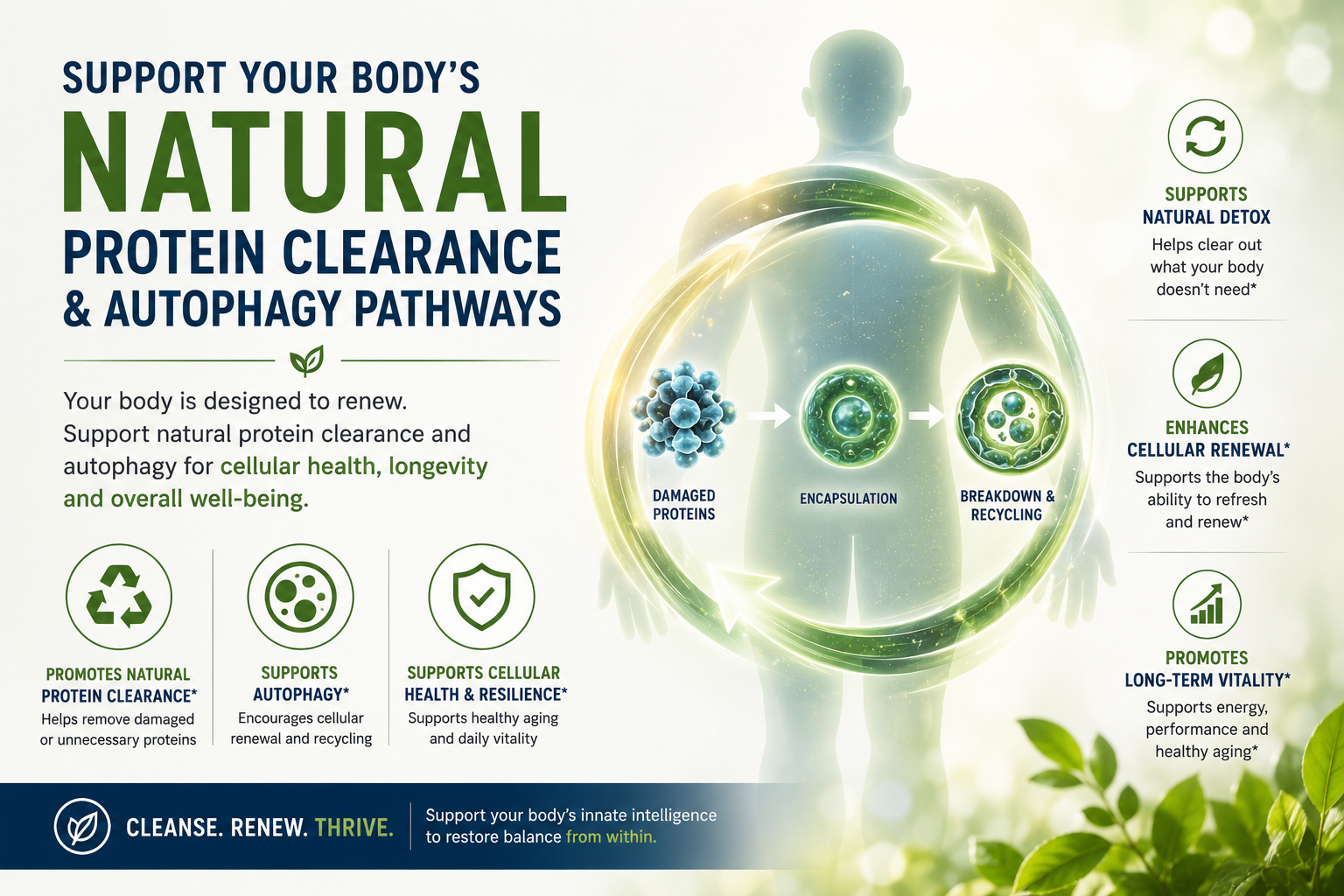
Yes — your body removes unwanted, damaged, or foreign proteins through three main pathways: autophagy (the cell's recycling system), the ubiquitin-proteasome system (a tagged-protein degradation pathway), and circulating proteases (enzymes that cleave proteins in the bloodstream). Supplemental enzymes like nattokinase and bromelain support the third pathway specifically — and have research showing direct effects on the SARS-CoV-2 spike protein.
The idea of "detox" makes mainstream medicine roll its eyes — and they are partially right. Most "detox" marketing is empty. But your body genuinely does have evolved systems for removing unwanted proteins, and supporting them is not magical thinking. It is biochemistry.
How does the body normally remove unwanted proteins?
Three primary systems handle unwanted protein clearance: autophagy (intracellular self-eating), the ubiquitin-proteasome system (tagged-protein degradation), and extracellular proteases (enzymes that cleave proteins in circulation). Sleep, fasting, and exercise all upregulate autophagy.
The three protein-clearance pathways:
Autophagy
Your cell's recycling crew. Damaged proteins, viral fragments, and even whole organelles get packaged and degraded for amino acid reuse. Activated by sleep, intermittent fasting, and exercise. Suppressed by chronic overeating and constant snacking.
Ubiquitin-proteasome system
More selective. Proteins flagged with a "ubiquitin tag" get fed into the proteasome and shredded into amino acid fragments for reuse. This is how the cell handles specifically identified misfolded or damaged proteins.
Circulating proteases
Work on proteins outside cells — in blood and tissue. This is where supplemental enzymes like nattokinase and bromelain operate, and where spike-protein research is most directly relevant.
Can supplements actually accelerate protein clearance?
Yes, in specific contexts. Nattokinase, a fibrinolytic enzyme, has been shown to degrade fibrin (microclots) and the SARS-CoV-2 spike protein in laboratory studies. Bromelain has been shown to cleave the spike protein and downregulate ACE2 expression in human cells.
These are not generic "detox" effects. They are specific enzymatic actions on specific protein substrates, documented in peer-reviewed journals — Tanikawa et al. 2022 for nattokinase and Sagar et al. 2021 for bromelain. The enzymes don't "flush" everything — they cleave specific molecular targets.
For lifestyle support, the levers that activate the body's own clearance systems are well-established: 7–9 hours of sleep nightly, intermittent fasting (even a 12-hour overnight window), and regular aerobic exercise all upregulate autophagy measurably.
How Ultimate Spike Detox Fits In
Pathway Targeted
Circulating proteases — the extracellular system that works on proteins in blood and tissue, where spike protein persists.
Enzymes Used
Nattokinase 8,000 FU and bromelain — two proteases that attack the spike protein from different molecular angles.
Clearance Support
Selenium and dandelion root support liver and antioxidant function during the clearance process.

Frequently Asked Questions
Is "detox" real?
The marketed version is mostly fiction. The biochemical version — autophagy, proteasomes, circulating proteases — is real, well-documented, and trainable through lifestyle and targeted supplementation.
Do juice cleanses help?
No. They lack protein, spike blood sugar, and stress the liver more than they support it. They do not activate autophagy or circulating protease activity in any meaningful way.
What about saunas?
Sweating eliminates some volatile compounds and supports circulation — and heat stress does activate mild autophagy. But sauna is not a primary protein-clearance pathway and won't degrade spike protein specifically.
How long does protein clearance take?
Cellular protein turnover happens daily. Larger structural protein clearance — including persistent spike protein in tissue — can take weeks to months. The McCullough Protocol is designed for a minimum 90-day commitment.
Get Started Today
Your body removes unwanted proteins constantly. Sleep, fasting, exercise, and — for spike protein specifically — enzyme support are the levers that work. Ultimate Spike Detox targets the pathway where spike protein lives: circulating in blood and tissue, accessible to proteolytic enzymes.
Learn MoreReferences
- Tanikawa, T., et al. (2022). Nattokinase degradation of spike protein of SARS-CoV-2. Molecules. pmc.ncbi.nlm.nih.gov/articles/PMC9458005
- Sagar, S., et al. (2021). Bromelain inhibits SARS-CoV-2 infection via targeting ACE-2, TMPRSS2, and spike protein. Clinical and Translational Medicine. pmc.ncbi.nlm.nih.gov/articles/PMC7811777
- Rubinsztein, D.C., et al. (2011). Autophagy and aging. Cell. pubmed.ncbi.nlm.nih.gov/21884931
- Cuervo, A.M. (2004). Autophagy: in sickness and in health. Trends in Cell Biology. pubmed.ncbi.nlm.nih.gov/14786592
Author
Works alongside our network of US-licensed clinicians and the McCullough Foundation research team.
This article is for informational purposes only and is not a substitute for professional medical advice, diagnosis, or treatment. Always seek the advice of a qualified healthcare provider with any questions you may have regarding a medical condition.


