


View Featured Categories
Does Curcumin Really Reduce Inflammation?


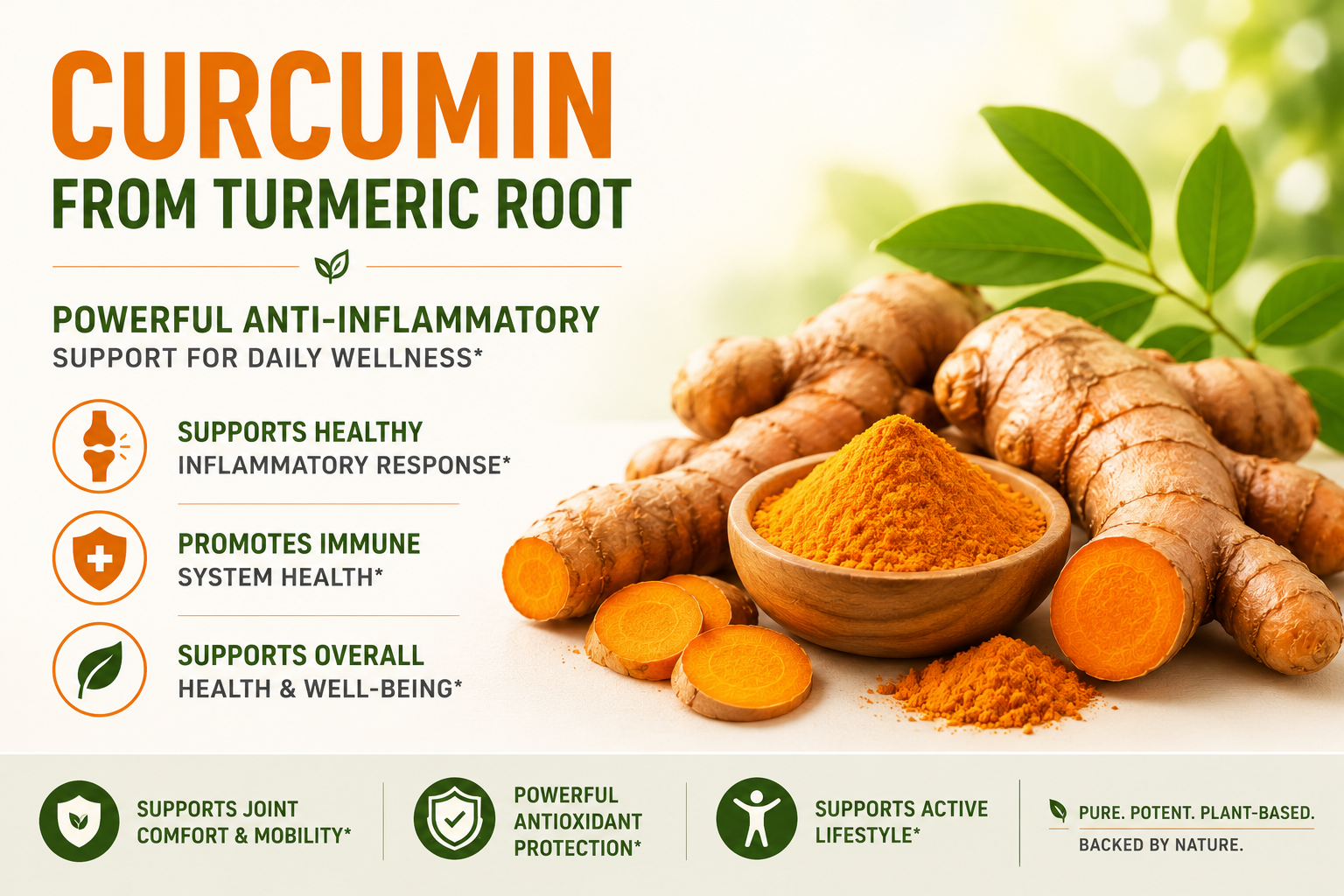
Inflammation · Curcumin Research
Medically reviewed by TWC Editorial Team
Yes — curcumin has been shown in over 100 human trials to lower inflammatory markers including CRP, TNF-α, and IL-6. The catch is bioavailability: pure curcumin is poorly absorbed without help. Adding piperine (black pepper extract) raises absorption by approximately 2,000% according to a 1998 study in Planta Medica. Most "turmeric" supplements without piperine deliver minimal usable curcumin.
You have seen turmeric show up everywhere — coffee, lattes, capsules, gummies. The research behind it is genuinely impressive. The execution in most products on the shelf is not.
Does curcumin actually work?
A 2017 review in Foods summarized human trials and found curcumin reduces inflammatory markers (CRP, TNF-α, IL-6) in conditions ranging from osteoarthritis to inflammatory bowel disease to metabolic syndrome. Effect sizes are modest but consistent across studies.
Curcumin's primary mechanism is inhibition of NF-κB — the master switch for inflammation. When NF-κB activity drops, downstream cytokines drop with it. This is why curcumin's effects show up across so many different conditions: they all share NF-κB-driven inflammation as a common driver.
For osteoarthritis specifically, randomized trials have compared curcumin directly to ibuprofen and found similar pain reduction with fewer GI side effects.
How much curcumin per day?
Most clinical trials showing benefit used 500–1,500 mg of curcumin (or curcuminoid extract) daily, usually with piperine or a lipid carrier. Standard turmeric powder contains only 3–5% curcumin, so a teaspoon of turmeric delivers far less than therapeutic doses.
Three formulations that actually work:
Curcumin + piperine
The original combination. Piperine inhibits the intestinal enzymes that break curcumin down before it can be absorbed, raising bioavailability by ~2,000%. Most studied and most affordable.
Curcumin phospholipid complex (Meriva, BCM-95)
Encases curcumin in phospholipids that improve absorption further. Higher cost, meaningful if piperine is contraindicated.
Nanoparticle curcumin
Emerging formulation. More expensive, and not consistently better than piperine-enhanced formulas in head-to-head comparisons.
Ultimate Spike Detox includes curcumin paired with black pepper extract (piperine) — the combination that started the bioavailability research and remains the most well-studied and cost-effective option.
Does curcumin do anything for spike protein?
Computational modeling published in peer-reviewed journals shows curcumin binds the SARS-CoV-2 spike protein receptor binding domain with high affinity, potentially preventing its interaction with ACE2 receptors on host cells. This is in silico work — computer modeling, not human trials.
The predicted binding sites and energies match what would be expected of a meaningful interaction, and the same mechanism explains curcumin's broader antiviral activity against influenza and other coronaviruses in cell-culture studies. Combined with nattokinase and bromelain — which degrade the spike protein through proteolytic mechanisms — curcumin adds a third line of attack via receptor-site binding.
How Ultimate Spike Detox Fits In
Anti-Inflammatory
Curcumin + piperine lowers CRP, TNF-α, and IL-6 — the persistent inflammatory markers common in post-COVID symptoms.
Spike Binding
Computational evidence suggests curcumin occupies the spike receptor binding domain, adding a third mechanism alongside nattokinase and bromelain.
Liver Support
Curcumin supports glutathione production and protects hepatocytes from oxidative stress during spike clearance.

Frequently Asked Questions
Can I just eat turmeric instead?
You would need many tablespoons daily — plus fat and black pepper — to approach therapeutic curcumin levels through food. Possible in theory, tedious in practice. A standardized extract is far more reliable.
Are there side effects?
Curcumin is generally well tolerated. High doses can have mild blood-thinning activity and may cause GI upset in some people. Those on anticoagulants should consult their clinician.
Curcumin extract or turmeric powder?
For research-backed effects, choose a curcumin extract standardized to 95% curcuminoids, paired with piperine. Turmeric powder as a spice is fine for flavor; it is not a therapeutic dose.
Can I take curcumin with food?
Yes. Curcumin is fat-soluble, so taking it with a meal that contains fat improves absorption. Unlike nattokinase, curcumin does not require fasting conditions.
Get Started Today
Curcumin reduces inflammation in human trials. Bioavailability is the rate-limiter, and piperine is the simplest fix. Ultimate Spike Detox delivers both — alongside the enzymatic ingredients that address the underlying spike-protein burden driving post-COVID inflammation.
Learn MoreReferences
- Hewlings, S.J. & Kalman, D.S. (2017). Curcumin: a review of its effects on human health. Foods. pmc.ncbi.nlm.nih.gov/articles/PMC5664031
- Shoba, G., et al. (1998). Influence of piperine on the pharmacokinetics of curcumin. Planta Medica. pubmed.ncbi.nlm.nih.gov/9619120
- Prabhakaran, P., et al. (2022). Curcumin binding to spike protein of SARS-CoV-2. Journal of Biomolecular Structure and Dynamics. pmc.ncbi.nlm.nih.gov/articles/PMC9056388
- Agarwal, K.A., et al. (2011). Efficacy of turmeric in the management of idiopathic orbital inflammatory disease. Phytotherapy Research. pubmed.ncbi.nlm.nih.gov/21308611
Author
Works alongside our network of US-licensed clinicians and the McCullough Foundation research team.
This article is for informational purposes only and is not a substitute for professional medical advice, diagnosis, or treatment. Always seek the advice of a qualified healthcare provider with any questions you may have regarding a medical condition.


