


View Featured Categories
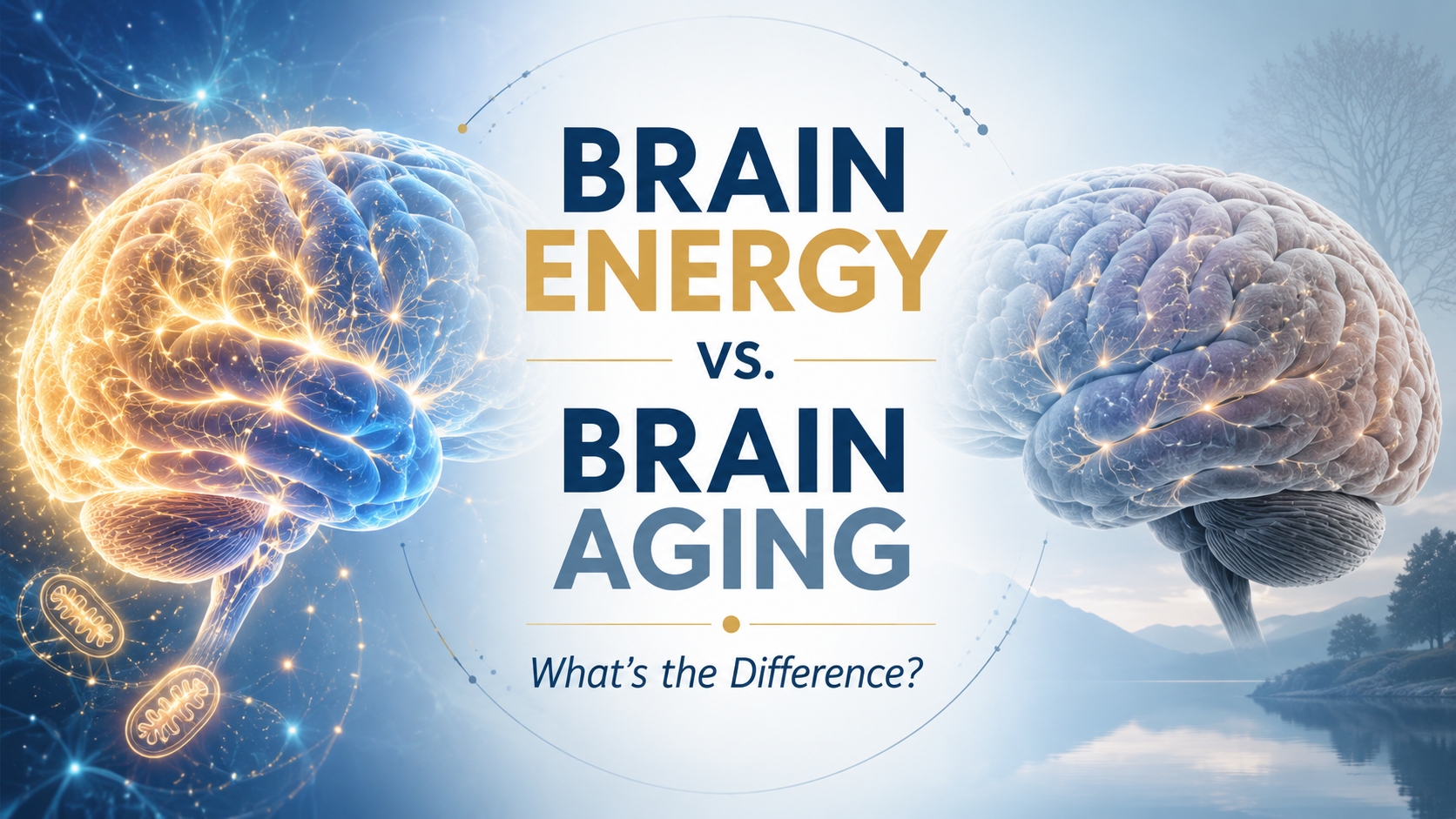
Brain Energy vs. Brain Aging: What's the Difference?


Brain Health · Cognitive Aging
When people talk about the "aging brain," they often hear about brain energy, mitochondria, NAD⁺, or other compounds that may support cellular energy production. They are closely related, but they are not the same thing.
Brain energy describes how the brain produces and uses the fuel required to function. Brain aging describes the broader biological changes that occur in the brain over time. (1,2) Understanding the difference can help put emerging research on compounds such as NAD⁺, PQQ, and methylene blue into perspective.
What Is Brain Energy?
The brain has an exceptionally high energy demand. Neurons require a continuous supply of energy to maintain electrical gradients, communicate with one another, release neurotransmitters, and perform essential cellular functions. Much of this energy ultimately comes from glucose and is converted into ATP, the cell's primary energy currency. (1)
Symphony of cells. Mitochondria play a central role in this process. They generate much of the ATP used by brain cells and also participate in cellular signaling and regulate oxidative stress. (2) Brain energy, however, is not simply a matter of having "more fuel." It depends on how effectively cells obtain, process, and use energy, and how well mitochondria, neurons, glial cells, and blood vessels work together.
Brain Aging Is Not a Neurodegenerative Disease
Brain aging is a much broader process. As we age, changes can occur in neurons, synapses, blood vessels, mitochondria, inflammation, cellular repair, and the brain's ability to adapt to stress. Researchers have identified changes in energy metabolism, oxidative balance, neuroplasticity, and cellular stress responses as important features of brain aging. (2,3)
Features Of Brain Aging
- Changes in neurons and synapses
- Blood vessel changes
- Mitochondrial changes
- Inflammation
- Cellular repair capacity
- The brain's ability to adapt to stress
Normal brain aging should also be distinguished from neurodegenerative disease. Not every age-related biological change indicates Alzheimer's disease or another neurological disorder. In fact, individuals differ considerably in how well they maintain cognitive function with age. (3)
The Gut-Brain Connection
Another system increasingly important in discussions of brain health is the gut-brain axis. The gut and brain communicate through a complex, bidirectional network involving the nervous system, immune system, hormones, metabolic signals, and the microorganisms that live in the gastrointestinal tract. Research suggests that the gut microbiota can influence brain homeostasis and plasticity — the brain's ability to change, reorganize, and form new neural connections — throughout life under both normal and pathological conditions. (4)
This connection is particularly interesting in the context of aging. Research reviewed by Petrella and colleagues suggests that changes in the gut microbiota may be associated with physiological aging and processes relevant to brain function. The gut-brain axis — via the vagus nerve that connects the brain to nearly every organ system — influences inflammation, immune signaling, metabolism, and other pathways involved in brain health and aging. (4) It reminds us that brain health is not isolated from the rest of the body.
Where Does NAD⁺ Fit In?
One reason NAD⁺ has attracted attention in brain-aging research is its role in cellular energy metabolism. Nicotinamide adenine dinucleotide (NAD⁺) is a molecule involved in numerous metabolic reactions and is essential for mitochondrial energy production. It also participates in DNA repair, cellular stress responses, and processes that maintain mitochondrial health. (6)
Cellular Energy Role
NAD⁺ is essential for mitochondrial energy production and participates in DNA repair and cellular stress responses. (6)
Age-Related Decline
Research indicates that NAD⁺ levels decline with age, including evidence of age-related changes in NAD⁺ metabolism in the human brain. (5)
Neuronal Resilience Hypothesis
Because neurons have high energy demands, researchers have proposed that maintaining NAD⁺ availability could help support neuronal resilience and mitochondrial function. (5,6)
Animal & Lab Findings
Increasing NAD⁺ availability or using NAD⁺ precursors has, in some models, improved mitochondrial function and cognitive outcomes. (5,6,7)
What About PQQ?
Pyrroloquinoline quinone (PQQ) is another compound of interest because of its relationship to mitochondrial function and cellular redox processes. Laboratory and animal research has suggested that PQQ may influence pathways involved in mitochondrial biogenesis, antioxidant defenses, and cellular signaling.
A 2024 randomized, placebo-controlled study involving 34 older adults with mild cognitive impairment examined a six-week intervention containing PQQ combined with dihydrogen. The researchers reported changes in some measures of brain metabolism, cerebral oxygenation, biomarkers, and some aspects of cognitive function. (8)
What About Methylene Blue?
Methylene blue is different from NAD⁺ and PQQ because it is a pharmacological compound with an established medical history. Researchers have become interested in it because of its effects on mitochondrial electron transport and cellular respiration. (9)
At low concentrations, methylene blue can participate in electron transfer within mitochondria, helping support cellular respiration. Experimental research has investigated its potential effects on mitochondrial function, oxidative stress, neuroprotection, and memory. (9,10)
In a randomized, double-blind study of 26 healthy adults, a single low dose of methylene blue was associated with changes in brain activity during attention and memory tasks and an approximately 7% improvement in correct responses on one memory-retrieval measure. (11) That finding is interesting; however, it is not evidence that methylene blue slows brain aging or prevents dementia.
Methylene blue also has some drug interactions. Consult with your care provider before using this product.
Brain Energy vs. Long-Term Brain Health
NAD⁺, PQQ, and methylene blue illustrate an important point about brain metabolism: improving or influencing one part of the energy system does not necessarily translate into better long-term brain health.
Comparing The Three Pathways
- NAD⁺ is involved in energy metabolism and cellular resilience.
- PQQ has attracted attention because of its potential effects on mitochondrial and redox pathways.
- Methylene blue can influence mitochondrial electron transfer.
- Each of these provides researchers with a different way to investigate the relationship between cellular energy and brain function. (5,8,9,10)
- The gut-brain axis adds another layer to this picture — brain function is influenced not only by what happens inside neurons and mitochondria, but also by communication between the brain, immune system, metabolism, and gastrointestinal system. (4)
Brain Health and Aging
Brain aging involves much more than energy production. Vascular health, inflammation, synaptic plasticity, DNA repair, oxidative stress, metabolic health, and the brain's ability to adapt all contribute to the aging process. In other words, overall lifestyle can play a large role in maintaining brain health. There is no one-size-fits-all supplement — supplements can add additional protection, but brain health starts with healthy lifestyle practices. (2,3,4) This is particularly true for physical activity and nutrition, both of which can support brain health.
Physical Activity
Exercise is associated with beneficial effects on cardiovascular function, metabolic health, and aspects of brain function, and research has also linked physical activity with brain glucose metabolism. Intermittent fasting has also been linked to improved brain health. (3,12)
Nutrition
Nutrition and overall metabolic health are also relevant. The gut-brain research provides another reason to view diet as part of a broader brain-health strategy, although no single diet, probiotic, or supplement has been established as a way to prevent brain aging. (4)
For those interested in exploring the cellular-energy pathway further, some formulations now combine methylene blue with NAD and PQQ into a single regimen, reflecting the same mitochondrial-support mechanisms discussed above — though, as with any active compound, this is worth discussing with a healthcare provider first.
The Bottom Line
Maintaining cardiovascular and metabolic health, staying physically active, getting adequate sleep, eating a nutritious diet, and remaining socially and mentally engaged are more established components of a brain-health strategy — supplements can help facilitate healthy brain function, but they are not a substitute for it. NAD⁺, PQQ, and methylene blue interact with biological pathways involved in cellular energy, mitochondrial function, or brain resilience, and research suggests these pathways may be relevant to how the brain responds to aging. The gut-brain axis adds another important piece of the puzzle, highlighting the connection between the gastrointestinal system, immune signaling, metabolism, and brain function. (4) Healthy brain aging is less about simply giving the brain "more energy" and more about maintaining the brain's ability to efficiently produce and use energy while preserving cellular resilience, adaptability, metabolic health, and overall brain health.
Featured Product

Recharge · Methylene Blue + NAD + PQQ
Methylene Blue, NAD, and PQQ in One Formula
Recharge pairs low-dose methylene blue with NAD and PQQ to support mitochondrial function, cellular energy production, and mental clarity — the same pathways explored throughout this article.
Shop NowYou Might Also Be Interested In
References
- Rae CD, Baur JA, Borges K, et al. Brain energy metabolism: A roadmap for future research. Journal of Neurochemistry. 2024;168(5):910-954. doi:10.1111/jnc.16032.
- Camandola S, Mattson MP. Brain metabolism in health, aging, and neurodegeneration. The EMBO Journal. 2017;36(11):1474-1492. doi:10.15252/embj.201695810.
- Mattson MP, Arumugam TV. Hallmarks of brain aging: Adaptive and pathological modification by metabolic states. Cell Metabolism. 2018;27(6):1176-1199. doi:10.1016/j.cmet.2018.05.011.
- Petrella C, Farioli-Vecchioli S, Cisale GY, et al. A Healthy Gut for a Healthy Brain: Preclinical, Clinical and Regulatory Aspects. Curr Neuropharmacol. 2021;19(5):610-628. doi:10.2174/1570159X18666200730111528.
- Lautrup S, Sinclair DA, Mattson MP, Fang EF. NAD+ in brain aging and neurodegenerative disorders. Cell Metabolism. 2019;30(4):630-655. doi:10.1016/j.cmet.2019.09.001.
- Katsyuba E, Auwerx J. Modulating NAD+ metabolism, from bench to bedside. EMBO Journal. 2017;36(19):2670-2683. doi:10.15252/embj.201797135.
- Hou Y, Lautrup S, Cordonnier S, et al. Supplementation with NAD+ and its precursors to prevent cognitive decline across disease contexts. Nutrients. 2022;14(15):3231. doi:10.3390/nu14153231.
- Baltic S, Nedeljkovic D, Todorovic N, et al. The impact of six-week dihydrogen-pyrroloquinoline quinone supplementation on mitochondrial biomarkers, brain metabolism, and cognition in elderly individuals with mild cognitive impairment: A randomized controlled trial. The Journal of Nutrition, Health & Aging. 2024;28(8):100287. doi:10.1016/j.jnha.2024.100287.
- Atamna H, Nguyen A, Schultz C, Ames BN. Methylene blue delays cellular senescence and enhances key mitochondrial biochemical pathways. The FASEB Journal. 2008;22(3):703-712. doi:10.1096/fj.07-9610com.
- Rojas JC, Bruchey AK, Gonzalez-Lima F. Neurometabolic mechanisms for memory enhancement and neuroprotection of methylene blue. Prog Neurobiol. 2012;96(1):32-45. doi:10.1016/j.pneurobio.2011.10.007.
- Rodriguez P, Zhou W, Barrett DW, et al. Multimodal Randomized Functional MR Imaging of the Effects of Methylene Blue in the Human Brain. Radiology. 2016;281(2):516-526. doi:10.1148/radiol.2016152893.
- National Institute on Aging. Cognitive health and older adults. U.S. Department of Health and Human Services, National Institutes of Health.
Author
This blog is for educational purposes and is not a substitute for individualized medical advice. Consult your healthcare provider before starting any new supplement, especially if you take other medications.


