


View Featured Categories
Melanoma Cases Are On the Rise


Health & Wellness · Cancer Awareness
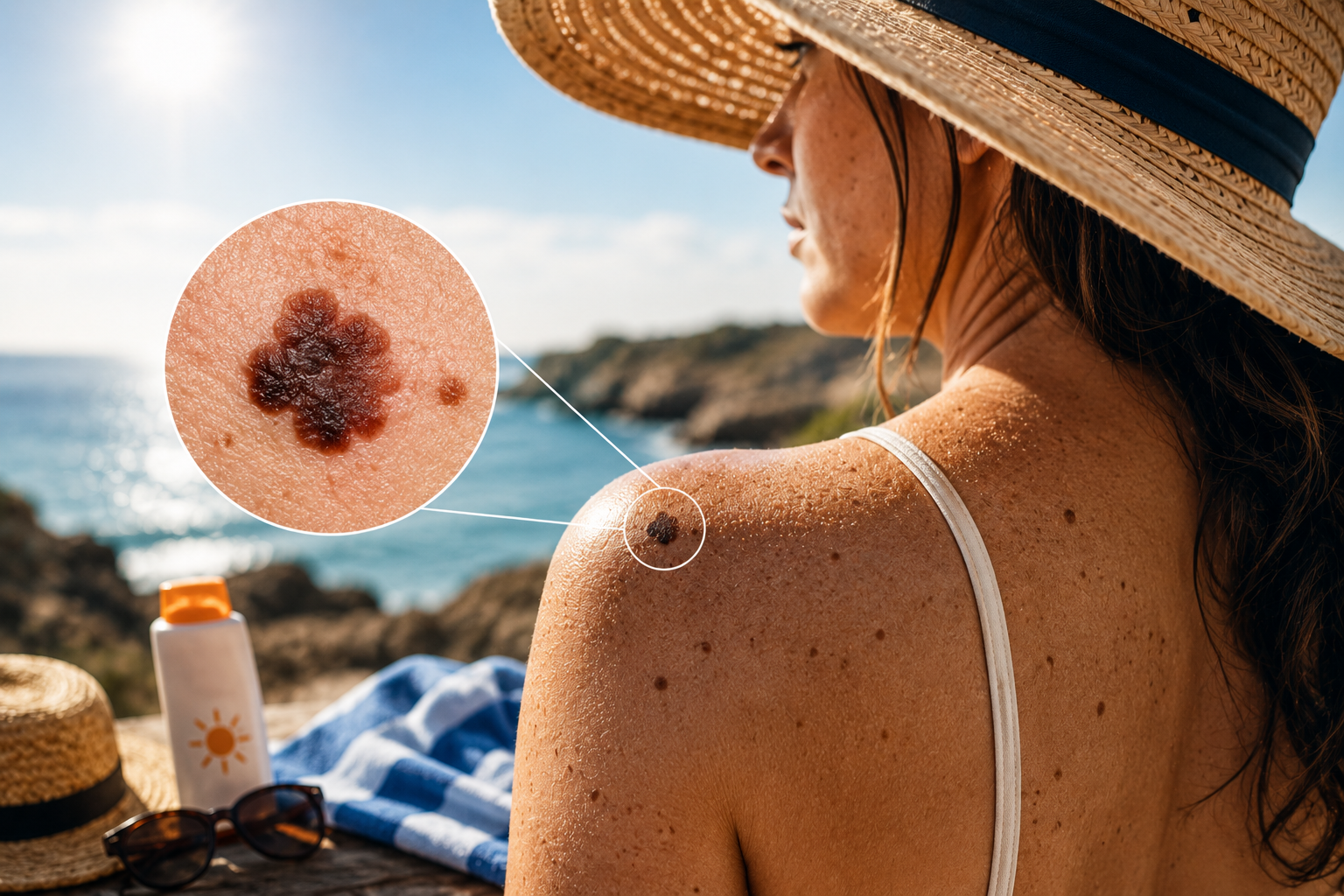
Already one of the top ten deadliest cancers, melanoma rates are rising — especially in young people. Over the past 30 years, melanoma cases have tripled. More than 234,000 total melanoma cases (invasive and non-invasive) are now diagnosed in the United States every year. (1)
Melanoma is a cancer of pigment-producing cells called melanocytes. These cells are found throughout the body — including mucous membranes, the palms, the soles of the feet, the fingernails, and even the eyes. (1)

The Three Main Types of Melanoma
Cutaneous (Skin)
About 90% of all melanoma cases. The most common and most aggressive type. It can spread rapidly if not caught early. Subtypes include amelanotic, desmoplastic, superficial spreading, and nodular/polypoid. Seriousness depends on stage, tumor thickness, and whether it has spread to lymph nodes or organs.
Mucosal
Rare but serious. Starts in the mucous membranes inside the body (nose, mouth, etc.). Not caused by sun exposure. Often found in areas that are hard to visualize, leading to delayed diagnosis.
Ocular (Uveal)
A rare cancer starting in the eye, usually in the uvea. Most common after age 50 and rare in children. More prevalent in people with light-colored eyes and fair skin. Inherited gene changes such as BAP1 mutations may cause earlier onset.
Risk Factors and Early Warning Signs
Around 90% of cutaneous melanoma cases are linked to excessive UV exposure from the sun or tanning beds. But UV isn't the only risk factor. (1)
Risk Factors (1)
- Five or more blistering sunburns between ages 15 and 20 significantly raise lifetime risk.
- Fair skin, light hair, and light eyes result in less natural UV protection.
- Close relatives with melanoma raise your risk through shared sun habits and sometimes inherited genes.
- Certain gene mutations (like CDKN2A and CDK4) can increase risk.
- A weakened immune system — for example, after an organ transplant — also raises risk.
Early Warning Signs
- A mole that changes shape
- Uneven or irregular borders
- Multiple colors within one spot
- A spot that grows quickly
- A mole that itches, bleeds, or refuses to heal
Prevention Starts With Protection
Over 90% of melanoma is caused by excessive UV exposure. The 5 S's of Sun Protection are a simple, proven framework. (2)

Slip
On clothing that protects the body from sun exposure.
Slather
Sunscreen on liberally. The Environmental Working Group is a useful resource for choosing a non-toxic, effective option.
Slap
On a hat to protect the face, head, and the delicate tissue around the eyes.
Seek
Shade between 10 a.m. and 4 p.m. when UV is most damaging.
Slide
On sunglasses that offer both UVA and UVB protection.
Diet, Antioxidants, and Emerging Evidence
Emerging evidence points to a diet high in antioxidants — berries, fresh fruits, and vegetables — as a way to mitigate melanoma through both prevention and healing. Antioxidants repair damage caused by UV light exposure and hold real potential by reducing systemic inflammation and fostering a gut microbiome that supports robust anti-tumor immunity. Clinical research indicates that nutrition can function as a complement to cancer therapies. (3)
You Do Need Some Sun
While over 90% of melanoma is caused by excessive UV exposure, moderate non-burning doses of sunlight carry multiple documented health benefits. (4)
Benefits of Moderate UV Exposure (4)
- Stimulates skin production of vitamin D3 and improves calcium absorption
- Enhances bone health and muscle function
- Mobilizes nitric oxide in the skin, leading to vasodilation and lower blood pressure
- Associated with lower cardiovascular disease and overall mortality
- Modulates immune function and inflammation, potentially reducing risk of autoimmune and inflammatory diseases such as multiple sclerosis and eczema
- Supports mood and brain function via serotonin and circadian rhythm regulation; daytime light exposure improves sleep quality and can reduce seasonal depressive symptoms
Conventional Treatment
Treatment depends on the type of melanoma and its stage. Early-stage melanoma can often be cured with surgery alone. More advanced or metastatic cases require an aggressive combination of approaches — immunotherapy, radiation therapy, or less frequently, chemotherapy. (5)
Off-Label Treatments Under Investigation
Ivermectin (6, 7)
Traditionally used to treat parasites, ivermectin has been shown in animal studies to slow melanoma cell growth and reduce metastasis. It appears to work by blocking signaling pathways — including PAK1 — that cancer cells use to grow and build new blood vessels. Research also suggests it can trigger cancer cell death and may make cancer stem-like cells more sensitive to standard treatments. (6, 7)
Mebendazole (8)
Used to treat parasitic intestinal worm infections, mebendazole shows promise against melanoma. In lab studies it killed melanoma cells more selectively than normal pigment cells. In mouse models of chemotherapy-resistant melanoma, it slowed tumor growth by disrupting microtubules and shutting down survival proteins like Bcl-2, triggering programmed cell death. (8)
Caught Early, It’s Highly Treatable
Melanoma, when caught early, is a highly treatable form of cancer. Prevention through lifestyle interventions — smart sun habits, a diet rich in antioxidants, and regular skin checks by a qualified health practitioner for those most at risk — can greatly improve the odds of not only survival, but a complete cure.
Featured Product
Prescriptions · Rx
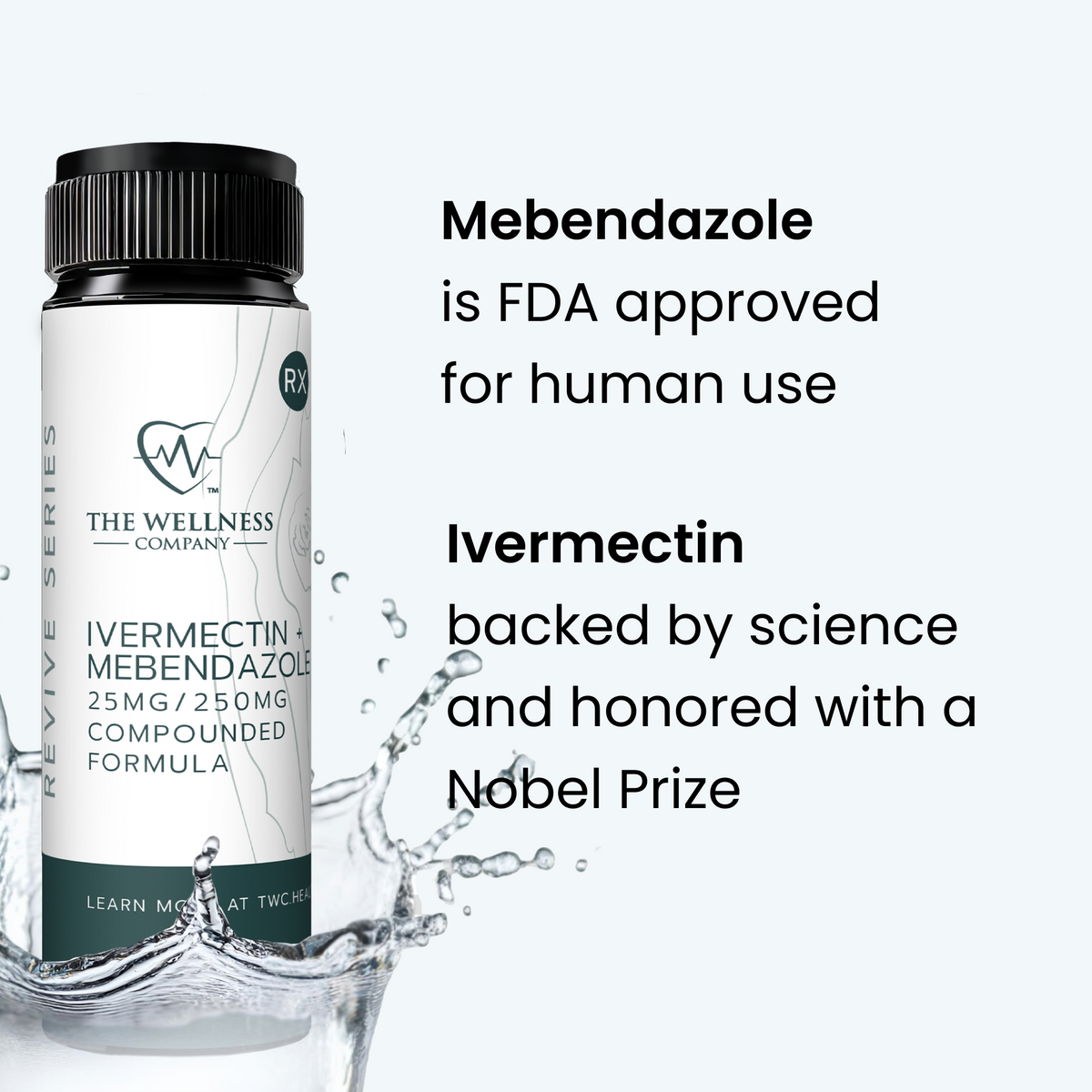
Ivermectin + Mebendazole
The same two compounds scientists are studying for their potential role against melanoma — combined in a single, prescription-grade capsule. Each dose contains 25mg Ivermectin and 250mg Mebendazole, tested for potency and compounded by a 50-state licensed US pharmacy.
Shop NowYou Might Also Be Interested In
References
- Melanoma Research Alliance. (n.d.). Melanoma 101. https://www.curemelanoma.org/about-melanoma/melanoma-101
- Centers for Disease Control and Prevention. (n.d.). Skin cancer resources. https://www.cdc.gov/skin-cancer/resources/index.html
- Watson, A. E., & Yusuf, N. (2025). The influence of dietary factors on melanoma development and progression: A comprehensive review. Nutrients, 17(11), 1891. https://doi.org/10.3390/nu17111891
- Juzeniene, A., & Moan, J. (2012). Beneficial effects of UV radiation other than via vitamin D production. Dermato-Endocrinology, 4(2), 109–117. https://doi.org/10.4161/derm.20013
- American Cancer Society. (n.d.). Treating melanoma skin cancer. https://www.cancer.org/cancer/types/melanoma-skin-cancer/treating.html
- Hashimoto, H., Messerli, S. M., Sudo, T., & Maruta, H. (2019). Macrocyclic lactones block melanoma growth, metastasis, and angiogenesis. Cancer Letters, 449, 1–10.
- Juarez, M., Schcolnik-Cabrera, A., & Dueñas-González, A. (2018). The multitargeted drug ivermectin: From an antiparasitic agent to a repositioned cancer drug. American Journal of Cancer Research, 8(2), 317–331.
- Tang, M., Hu, X., Wang, Y., Yao, X., Zhang, W., Yu, C., Cheng, F., Li, J., & Fang, Q. (2021). Ivermectin, a potential anticancer drug derived from an antiparasitic drug. Pharmacological Research, 163, 105207. https://doi.org/10.1016/j.phrs.2020.105207
Author


