


View Featured Categories
Can I Take Supplements While Undergoing Cancer Treatment?


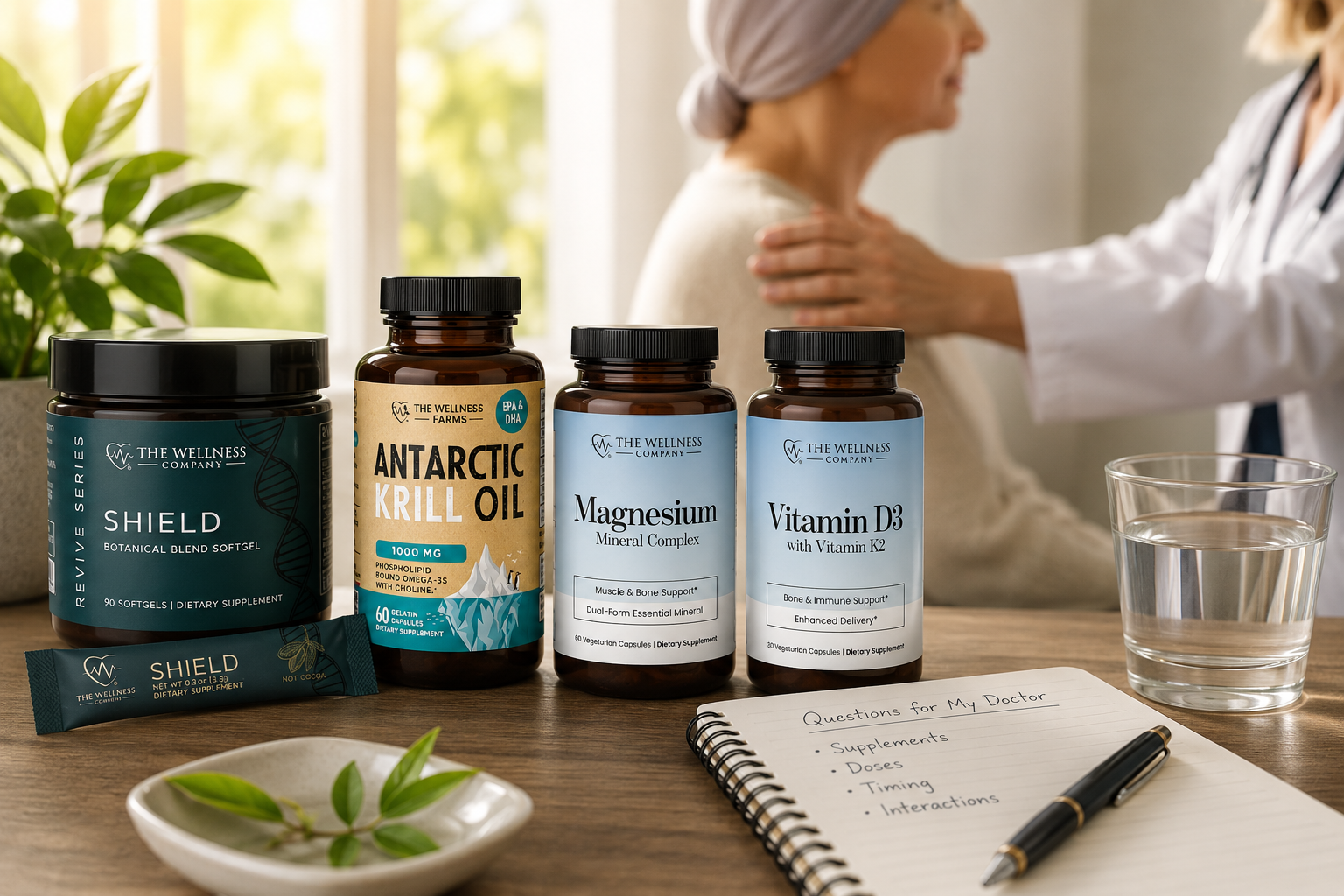
Cancer Care · Supplements & Nutrition
Can I Take Supplements While Undergoing Cancer Treatment?
Your oncologist gave you a treatment plan. You have a cabinet full of supplements. Now what?
This is one of the most common — and most important — questions cancer patients ask. The answer isn’t a flat yes or no. It depends on what you’re taking, what treatment you’re on, and what your doctor knows about the combination.
Here’s what the research actually says.
Most Supplements Are Not Automatically Safe During Treatment
That surprises people. Supplements feel natural, harmless, even healthy. And many of them are — under normal circumstances. But cancer treatment changes the equation.
Chemotherapy and radiation work by targeting fast-growing cells. Some antioxidants — vitamin C, vitamin E, beta-carotene — may actually protect cancer cells from that damage. A 2020 review in CA: A Cancer Journal for Clinicians found that high-dose antioxidant supplementation during active treatment could reduce the effectiveness of certain therapies. (1)
That’s not a fringe finding. It’s a real concern oncologists take seriously.
So What Can You Safely Take?
Some supplements have a strong track record of supporting cancer patients without interfering with treatment. Vitamin D deficiency is extremely common in cancer patients, and low levels have been associated with worse outcomes in several cancers. (2) Correcting a deficiency — with your doctor’s knowledge — is different from megadosing.
Omega-3 fatty acids have shown promise in reducing cancer-related inflammation and preserving lean muscle mass during chemotherapy. (3) Probiotics have been studied for their role in reducing gut side effects from treatment. Magnesium supports nerve function and may reduce chemotherapy-induced neuropathy.
The key word in all of that is studied. These aren’t guesses.
Timing Matters More Than People Realize
Even a supplement that’s generally safe might cause a problem if taken too close to a treatment session. Ginger, for example, is widely used to reduce nausea — but some research suggests it could affect platelet function at high doses. (4) That matters a lot when you’re immunocompromised.
The rule most integrative oncologists use: disclose everything, time supplements carefully, and don’t start anything new without asking first.
The Disclosure Problem
Studies suggest that anywhere from 40 to 80 percent of cancer patients use supplements — and a significant portion don’t tell their oncologist. (5) The reasons vary: fear of judgment, assumption it doesn’t matter, or simply forgetting that supplements count as something to mention.
They do.
Your oncologist isn’t going to take your vitamins away for no reason. They’re going to weigh the evidence and tell you what’s smart. That conversation is worth having.
The Bottom Line
Some supplements are safe and even beneficial during cancer treatment. Others carry real risks. You can’t sort that out by reading a label. The right approach is simple: make a complete list of everything you’re taking — doses and all — and bring it to your next appointment. That list might be the most useful thing you bring.

Vitamins & Supplements / Immune Support
Vitamin D3 + K2 — Daily Sunshine in a Bottle
Vitamin D deficiency is one of the most common and correctable nutritional gaps in cancer patients. Our D3 + K2 formula delivers a clinically relevant dose alongside K2 to ensure calcium goes where it belongs — supporting bones, immune health, and cardiovascular function.
Shop NowYou Might Also Be Interested In
References
- Yasueda, A., Urushima, H., & Ito, T. (2016). Efficacy and interaction of antioxidant supplements as adjuvant therapy in cancer treatment. Integrative Cancer Therapies, 15(1), 17–39.
- Feldman, D., et al. (2014). The role of vitamin D in reducing cancer risk and progression. Nature Reviews Cancer, 14(5), 342–357.
- Murphy, R. A., et al. (2011). Supplementation with fish oil increases first-line chemotherapy efficacy. Cancer, 117(16), 3774–3780.
- Bode, A. M., & Dong, Z. (2011). The amazing and mighty ginger. In Herbal Medicine: Biomolecular and Clinical Aspects. CRC Press.
- Use of complementary and alternative medicine by cancer patients. (2019). Journal of Clinical Oncology.
Author
This article is for informational purposes only and does not constitute medical advice. Always consult your oncologist or a qualified healthcare provider before starting, stopping, or changing any supplement regimen during cancer treatment.


