


View Featured Categories
The Foundation of Health Starts in Your Cells


Cellular Health · Wellness Fundamentals
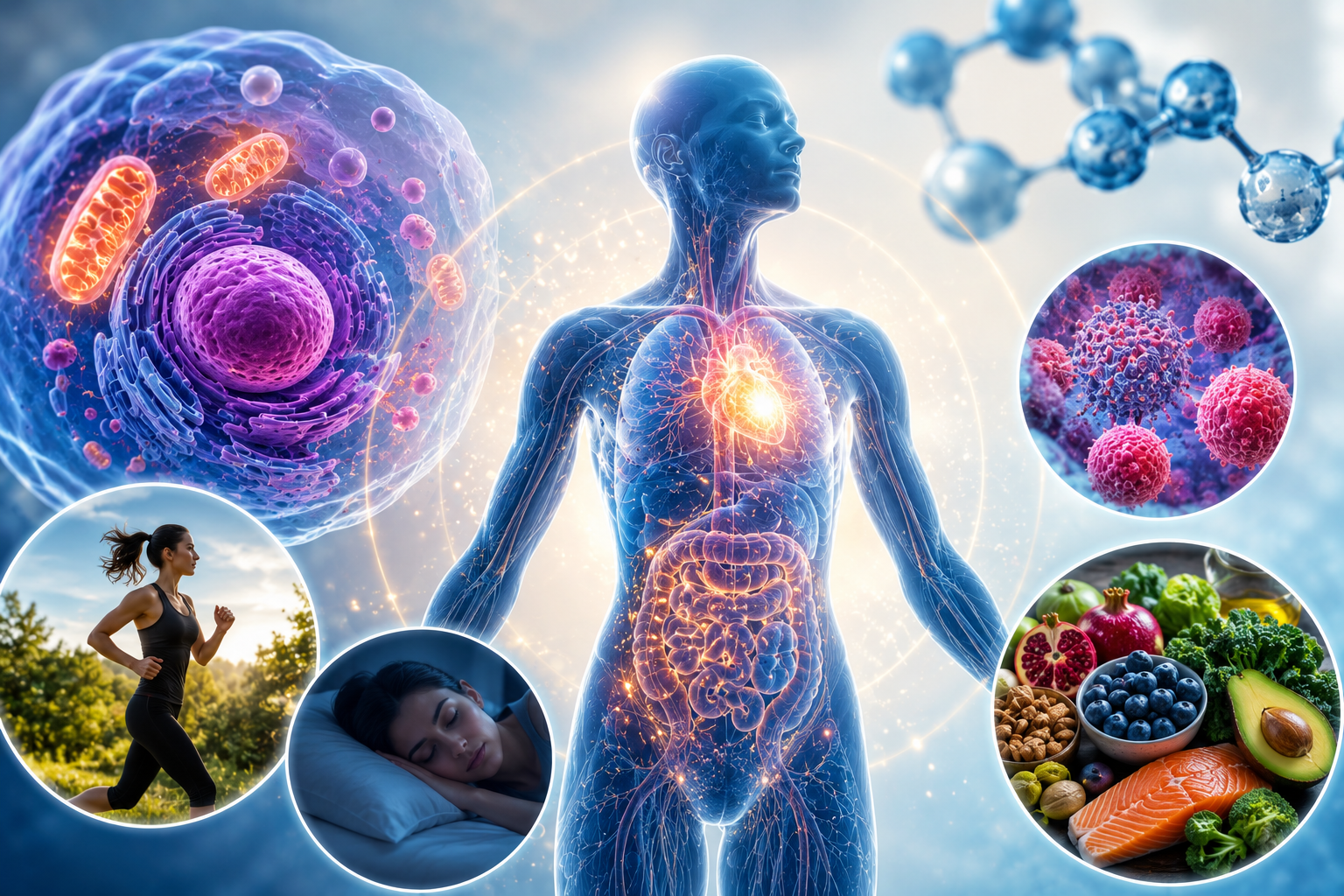
Your body is made up of trillions of tiny living units called cells — and how well those cells function determines how well you function. From the energy you feel in the morning to how fast you bounce back from illness, cellular health is the starting point for nearly everything.
Think of each cell as a small, complex factory. When all the machinery inside that factory is running smoothly, you feel energetic, sharp, and resilient. When things go wrong at the cellular level — when the "factory" is overwhelmed, poorly fueled, or damaged — the effects ripple outward into every system in your body.
Every cell contains structures called organelles, each with a specific job. The most important of these is the mitochondrion — the cell's power plant. Mitochondria convert the food you eat into a form of energy your body can actually use: a molecule called ATP (adenosine triphosphate). Without healthy mitochondria, your cells simply cannot do their work.
Why Cellular Health Matters (1)
When your cells are healthy, you notice it. When cellular health declines, the opposite is true. Science has linked poor cellular function to a wide range of chronic conditions — including cardiovascular disease, diabetes, Alzheimer's disease, Parkinson's disease, and cancer. This is why supporting cellular health is not just about feeling good today. It is about protecting your future.
Signs of Healthy Cellular Function
- More energy throughout the day
- Stronger immune responses that fight off illness faster
- Slower aging at the biological level
- Quicker recovery from exercise, stress, or injury
How Cellular Function Affects Energy (2)
Every movement you make, every thought you think, every heartbeat — all of it requires energy. That energy is made inside your mitochondria. They take nutrients from the food you eat and run them through a series of chemical steps — known as the Krebs cycle and the electron transport chain — to generate ATP.
As we age, mitochondria become less efficient. Factors like chronic stress, poor diet, environmental toxins, and lack of sleep can speed up this decline. When mitochondrial function drops, so does your energy. You may feel tired more easily, think less clearly, and recover more slowly from physical activity.
Key Points About Cellular Energy
- Mitochondria produce nearly all the energy the body needs to survive
- NAD+ (nicotinamide adenine dinucleotide) fuels hundreds of cellular reactions, including energy production — and it naturally declines by about 50% between the ages of 20 and 60
- Supporting mitochondrial health through exercise, quality sleep, and antioxidant-rich foods can help maintain cellular energy output*
How Cellular Function Affects Immunity (3)
Your immune system starts and ends at the cell level. Immune cells — like T cells, natural killer cells, and neutrophils — must function well to defend you against viruses, bacteria, and abnormal cells. These immune cells depend on the same healthy mitochondria, energy supply, and antioxidant protection as every other cell in your body.
Research has shown that aging weakens both cellular function and immune response together — a process sometimes called "immunosenescence," or immune aging. Oxidative stress (discussed below) is one of the key drivers of this decline. When free radicals overwhelm the immune cells, those cells become less able to multiply, respond, and communicate.
How Cellular Function Affects Aging (4)
Aging is not just a matter of time passing. At the cellular level, it involves accumulated DNA damage, declining mitochondrial efficiency, shortening of telomeres (the protective caps on chromosomes), and a build-up of cellular "waste" the body cannot clean up fast enough.
One of the most important discoveries in aging research is that cellular senescence — the state where damaged cells stop dividing but do not die — can drive inflammation throughout the body and accelerate disease. Keeping cells clean, well-fueled, and protected from excessive damage is central to healthy aging.
How Cellular Function Affects Recovery (5)
Recovery — whether from an injury, illness, intense exercise, or surgery — depends heavily on cellular function. Cells must be able to clear out damaged proteins and cellular debris, rebuild healthy tissue through protein synthesis, reduce inflammation in a controlled and timely way, and restore normal energy production.
Proteolytic enzymes (proteins that break down other proteins) play a key role in this process, as explained in a later section. When cellular function is impaired — especially by ongoing oxidative stress — recovery slows down, inflammation lingers, and tissue repair takes longer.
Oxidative Stress: The Silent Disruptor (6,7)
Oxidative stress is one of the most important — and least talked about — threats to cellular health. Your cells naturally produce free radicals as a byproduct of energy production. These are unstable molecules with an unpaired electron. In small amounts, free radicals are normal and even useful — the immune system uses them to destroy pathogens. The problem occurs when free radical production exceeds the body's ability to neutralize them. In this state, free radicals damage cell membranes, proteins, and DNA.
Linked Conditions
Cardiovascular disease, Alzheimer's disease, Parkinson's disease, diabetes, and cancer
Sources That Increase It
Chronic inflammation, poor diet, environmental toxins, smoking, alcohol, chronic stress, certain infections

The Spike Protein and Cellular Damage (8)
In recent years, research has drawn attention to how the SARS-CoV-2 spike protein can cause cellular damage — independent of the virus itself. A landmark study published in Circulation Research by the Salk Institute found that the spike protein damages vascular endothelial cells — the cells that line blood vessel walls — by binding to a receptor called ACE2. This binding disrupts mitochondrial signaling, causing mitochondria to become damaged and fragmented. In other words, the spike protein directly impairs the cellular power plants.
Key Research Findings
- Exposure to the spike protein alone (without the rest of the virus) was enough to damage lung tissue and arteries in animal models
- Spike protein has been shown to induce oxidative stress, DNA double-strand breaks, and cellular senescence
- The spike protein promotes paracrine senescence — meaning damaged cells can spread their inflammatory state to neighboring healthy cells
- Research published in Aging and Disease confirmed that the spike protein reduces the cell's own cytoprotective defenses and promotes human endothelial cell senescence
This research highlights why cellular-level support — including antioxidant defense, protein clearance, and detox pathways — has become such an important topic in the context of post-COVID recovery and long COVID. For more on liver detox support, see our article on the best herbs for liver detox.
NAC (N-Acetylcysteine): Antioxidant Support at the Cellular Level
N-acetylcysteine (NAC) is one of the most well-researched compounds for supporting cellular antioxidant defense. It is a modified form of the amino acid cysteine, and its most important role is as a direct precursor to glutathione — the body's most powerful cellular antioxidant.
Boosts Glutathione*
Provides cysteine — the raw material cells need to produce glutathione, the master antioxidant that neutralizes free radicals and supports detoxification
Reduces Oxidative Stress*
Has been shown to reduce reactive oxygen species, lipid peroxidation, and cellular apoptosis in multiple cell types
Supports Immune Function*
Research in Free Radical Biology and Medicine found NAC supplementation improved several immune cell functions in postmenopausal women (9)
Protects the Vascular System*
A 2025 study found NAC significantly reduced ROS levels, restored mitochondrial function, and reduced vascular inflammation in endothelial cells (10)
NAC has also been studied for its specific effects on spike protein. In combination with bromelain, NAC may help break the disulfide bonds in spike protein, reducing its ability to cause cellular damage — a finding that has attracted significant research attention. (14)
Bromelain and Proteases: Cellular Cleanup Crew (12,13)
Bromelain is a proteolytic (protein-digesting) enzyme found naturally in pineapple. Proteases are a broader class of enzymes that break down proteins into smaller pieces. Together, they play important roles in cellular repair and recovery.* For more on how proteases work, see our article on what proteases are and what they do.
Bromelain: What the Research Shows*
- Acts as a natural anti-inflammatory and may help reduce swelling and tissue damage after injury*
- Research published in Clinical and Translational Medicine found that bromelain inhibits SARS-CoV-2 infection by targeting the spike protein, ACE2, and TMPRSS2 — the key proteins the virus uses to enter cells
- Molecular docking studies have supported bromelain's potential against multiple SARS-CoV-2 variants by disrupting the spike protein's structure*
BromAc: Bromelain + NAC Combined (15,16)
One of the most exciting research developments involves the combination of bromelain and acetylcysteine (BromAc). A study published in Viruses (2021) found that BromAc synergistically inactivated SARS-CoV-2 in vitro in a concentration-dependent manner — disrupting the spike and envelope proteins by breaking glycosidic linkages (bromelain's role) and disulfide bonds (NAC's role). Single agents alone were not effective. The combination was necessary for the synergistic effect.
A follow-up study published in Scientific Reports (2025) confirmed antiviral effects of BromAc against the Omicron variant, and a Frontiers in Immunology study showed that BromAc reduced the cytokine storm — the dangerous inflammatory overreaction — triggered by SARS-CoV-2.
Systemic Proteases (Proteolytic Enzymes) (17)
Proteases taken systemically — meaning absorbed into the bloodstream rather than just digesting food in the gut — have been studied for their role in reducing chronic inflammation throughout the body, breaking down fibrin deposits and abnormal protein aggregates in blood and tissues, supporting cardiovascular health, and speeding recovery from injury and exercise.
Proteolytic enzymes are produced as precursor proteins whose activation is precisely regulated, serving critical functions including the regulation of cell maturation and multiplication, collagen synthesis and turnover, and the removal of necrotic tissue following inflammation.
Detox Support: Helping Cells Clear the Clutter
Every day, your cells are exposed to toxins — from environmental pollutants, metabolic byproducts, and dietary sources. Your body handles this through a two-phase detoxification process, primarily in the liver, but also within individual cells.
Phase I uses a family of enzymes (cytochrome P450) to chemically transform toxins into intermediate compounds. These intermediates can sometimes be more reactive than the original toxin, which is why Phase II must follow quickly. Phase II neutralizes and packages those reactive intermediates so they can be safely excreted. (18)*
Key Phase II Detox Pathways
- Glutathione conjugation — requires glutathione precursors like cysteine (supplied by NAC), glutamic acid, and glycine
- Sulfation — requires sulfur-rich foods like cruciferous vegetables and allium plants
- Methylation — requires B vitamins (especially B12, B6, and folate), methionine, and magnesium
- Glucuronidation — supported by cruciferous vegetables, resveratrol, curcumin, and citrus
Glutathione: The Master Antioxidant and Detox Molecule (19)
Glutathione (GSH) is both the body's most powerful antioxidant and a key player in detoxification.* It works by tagging toxins for removal through glutathione conjugation, neutralizing free radicals directly inside cells, recycling other antioxidants like vitamins C and E, and protecting mitochondria from oxidative damage.*
Glutathione levels naturally decline with age and can be depleted by chronic illness, high toxic burden, poor diet, and oxidative stress. Strategies to increase cellular glutathione include NAC supplementation, alpha-lipoic acid, selenium, and an antioxidant-rich whole-food diet.*
Supporting Cellular Health: Key Takeaways (20)*
Eat antioxidant-rich foods — colorful vegetables and fruits supply diverse compounds that neutralize free radicals and support Phase II detox pathways. Support glutathione production with NAC, alpha-lipoic acid, selenium, and sulfur-rich foods. Consider proteolytic enzyme support: bromelain and systemic proteases can help reduce inflammation, support vascular health, and assist in clearing abnormal proteins.
Protect mitochondria through regular aerobic exercise and quality sleep. Minimize oxidative stress by reducing processed food, managing chronic stress, and limiting toxin exposure. Support cellular detox pathways with adequate B vitamins, magnesium, sulfur-rich foods, and cruciferous vegetables.
The science of cellular health is evolving rapidly. While the findings discussed in this article are drawn from peer-reviewed and NIH-indexed research, this blog is for educational purposes only and does not constitute medical advice. Individuals with specific health concerns should consult a qualified healthcare provider before making changes to their supplement regimen.
Featured Product

Cellular Defense / Antioxidant Support
Replenish Your Body's Master Antioxidant
Ultra NAC combines N-Acetylcysteine with Liposomal Glutathione, Milk Thistle, Quercetin, and key minerals to accelerate detoxification, protect mitochondria, and defend against oxidative stress and spike protein damage.*
Shop NowYou Might Also Be Interested In
- How to Reduce Excess Inflammation in the Body
- Why Do People Take CoQ10?
- Kidney Health and How You Can Support It
These statements have not been evaluated by the Food and Drug Administration. The information contained in this article is for educational purposes only and is not intended to diagnose, treat, cure, or prevent any disease.
References
- Kennedy, B. K., et al. (2014). Geroscience: linking aging to chronic disease. Cell, 159(4), 709–713.
- McReynolds, M. R., Chellappa, K., & Baur, J. A. (2020). Age-related NAD+ decline. Experimental Gerontology, 134, 110888.
- Cannizzo, E. S., et al. (2011). Oxidative stress, inflamm-aging and immunosenescence. Journal of Proteomics, 74(11), 2313–2323.
- Tenchov, R., et al. (2024). Aging Hallmarks and Progression and Age-Related Diseases. ACS Chemical Neuroscience, 15(1), 1–30.
- Wilkinson, H. N., & Hardman, M. J. (2020). Wound healing: cellular mechanisms and pathological outcomes. Open Biology, 10(9), 200223.
- Reddy, V. P. (2023). Oxidative Stress in Health and Disease. Biomedicines, 11(11), 2925.
- Health.com. (2024, September 19). How to recognize and manage oxidative stress.
- Lei, Y., et al. (2021). SARS-CoV-2 Spike Protein Impairs Endothelial Function via Downregulation of ACE 2. Circulation Research, 128(9), 1323–1326.
- Arranz, L., et al. (2008). The glutathione precursor N-acetylcysteine improves immune function in postmenopausal women. Free Radical Biology and Medicine, 45(9), 1252–1262.
- Marasinghe, C. K., et al. (2025). Protective Effect of N-Acetylcysteine (NAC) on oxLDL-Induced Endothelial Dysfunction. Journal of Microbiology and Biotechnology, 35, e2504039.
- Tenório, M. C. D. S., et al. (2021). N-Acetylcysteine (NAC): Impacts on Human Health. Antioxidants, 10(6), 967.
- Sagar, S., et al. (2021). Bromelain inhibits SARS-CoV-2 infection via targeting ACE-2, TMPRSS2, and spike protein. Clinical and Translational Medicine, 11(2), e281.
- Zafar, T. A., et al. (2021). Bromelain, a group of pineapple proteolytic complex enzymes, and their therapeutic and nutritional values. Foods, 10(10), 2249.
- Akhter, J., et al. (2021). The Combination of Bromelain and Acetylcysteine (BromAc) Synergistically Inactivates SARS-CoV-2. Viruses, 13(3), 425.
- Akhter, J., et al. (2021). BromAc Synergistically Inactivates SARS-CoV-2. Viruses, 13(3), 425.
- Reis, E. V. S., et al. (2025). Antiviral effect of BromAc against SARS-CoV-2 Omicron variant. Scientific Reports, 15(1), 11882.
- Henrotin, Y. E., et al. (2022). Combination of Enzymes and Rutin to Manage Osteoarthritis Symptoms. Rheumatology and Therapy, 9(5), 1305–1327.
- Hodges, R. E., & Minich, D. M. (2015). Modulation of Metabolic Detoxification Pathways. Journal of Nutrition and Metabolism, 2015, 760689.
- Minich, D. M., & Brown, B. I. (2019). A Review of Dietary (Phyto)Nutrients for Glutathione Support. Nutrients, 11(9), 2073.
- Hodges, R. E., & Minich, D. M. (2015). Modulation of Metabolic Detoxification Pathways. Journal of Nutrition and Metabolism, 2015, 760689.
Author
*These statements have not been evaluated by the Food and Drug Administration. This article is for educational purposes only and is not intended to diagnose, treat, cure, or prevent any disease.


