


View Featured Categories
DEET's Dark Side: Protection or Health Risk?


Health & Wellness · Insect Protection
DEET's Dark Side: Protection or Health Risk?
With tick bites on the rise, essential oils may be your best natural defense.
Experts are warning that we are experiencing an aggressive tick-bite season, bringing a high risk of tick-borne diseases. The Northeast, Southeast, and Midwest are currently seeing the highest rates of tick encounters. However, aggressive ticks — like the Lone Star tick — are expanding their range into the Pacific coastal regions and further north. (1)
Every year, an estimated 31 million people in the United States are bitten by a tick. Lyme disease is the most common tick-borne disease in the United States, with an estimated 476,000 patients treated for Lyme each year. (1)
Other serious tick-borne illnesses are also on the rise. Babesiosis, anaplasmosis, and alpha-gal syndrome are all seeing a surge in numbers. Lyme disease, babesiosis, and anaplasmosis can all be treated with antibiotics. Alpha-gal, however, which causes an allergy to meat, has no known cure. (2)
DEET — The Good, the Bad, and the Alternatives
DEET (N,N-diethyl-meta-toluamide) has remained a popular over-the-counter insect repellent. It is not an insecticide. When used sparingly and with caution, DEET is an effective insect repellent. However, DEET comes with some rather serious side effects if not used prudently.
According to the late Duke University pharmacologist Mohamed Abu-Donia, a pioneer researcher who studied the effects of environmental toxicology on the human body: (3)
"Damage to these areas could result in problems with muscle coordination, muscle weakness, walking, or even memory and cognition."
— Mohamed Abu-Donia, Pharmacologist, Duke UniversityKey Findings on DEET Safety (3)
- Prolonged exposure to DEET can impair brain function in certain regions.
- Short-term exposure does not appear to be harmful, but concentrations above 30% are not recommended.
- DEET should never be applied directly to an infant's or child's skin.
Natural Tick Repellents
The search for effective tick and insect repellents has led researchers to explore essential oils. Several essential oils have documented efficacy as insecticides and/or repellents, namely lemon eucalyptus, clove, cinnamon, turmeric, thyme, rosemary, cedarwood, peppermint, and geraniol.
Natural — But Use With Caution
- Pure, undiluted essential oils can cause serious skin reactions. They must be diluted with a carrier oil for safe application.
- There are many essential oil recipes for DIY repellents, but finding a correct, safe, and effective formulation can be challenging.
- Essential oil blends are effective for 1–1.5 hours, compared to DEET's 4–6 hours, and must be reapplied more frequently.
Proven Safe and Effective Oils
For repelling and killing ticks, the combination of turmeric essential oil and clove oil has a proven track record. Exercise caution when used around sensitive skin areas and on small children. If in doubt, apply liberally to clothing, avoiding direct skin contact.
Turmeric Oil — Repellent (4, 6)
Highly effective at preventing ticks from attaching. Studies show performance comparable to DEET. Research from the University of Bristol found that a 2.5% concentration in carrier oil repelled ticks on dogs. Generally considered safe for humans — perform a patch test before applying.
Clove Oil — Tick Killer (5, 7)
Extremely potent at killing ticks on contact. A 16% concentration of clove oil (and its active component, eugenol) achieves mortality rates up to 97% against ticks. High concentrations can adversely affect dogs. For human use, a topical application of 1–2% is considered safe. Perform a patch test before applying.
The Best Defense Is a Good Offense
Ticks are found in every state and carry disease. Proactive measures to manage your yard and home environment can significantly reduce your risk of tick encounters. When in the woods or other high-risk areas, an effective tick killer and deterrent are powerful allies in the fight against tick-borne disease.
Protect Yourself (7, 8)
- Check Regularly: Perform full-body tick checks on yourself, your children, and your pets after spending time outdoors.
- High-Heat Drying: Put outdoor clothing in the dryer on high heat for 10 minutes to kill any unseen ticks.
- Track Local Activity: Monitor high-risk areas using the CDC Tick Bite Tracker to check bite trends and risk levels in your specific region.
Protect Your Yard and Home
- Create Barriers: Lay a three-foot-wide barrier of woodchips or gravel between lawns and wooded areas to restrict tick migration into your yard.
- Mow Weekly: Keep grass short, under three inches high. Ticks crawl to the tips of tall blades to latch onto passing hosts.
- Clear Debris: Rake leaves and clear brush immediately. Ticks thrive in the cool, damp shade of leaf piles.
- Move Playgrounds: Place swing sets, patios, and decks in sunny areas away from yard edges. Ticks dry out and die quickly in direct sunlight.
- Deter Wildlife: Remove bird feeders and stack firewood neatly in sunny spots. These attract mice, deer, and rats, which carry ticks.
- Apply Pesticides: Spray a perimeter yard treatment containing bifenthrin or permethrin in late spring, focusing strictly on yard edges and shaded brush.
Your Takeaway
When used sparingly and correctly, DEET remains an effective option — but it is not without risk, especially for children and with prolonged use. Natural alternatives such as turmeric and clove essential oils offer promising, research-backed protection with a gentler safety profile. Combine them with smart yard management and consistent tick-check habits for the most robust defense against tick-borne diseases this season.
Featured Product
Emergency Kits
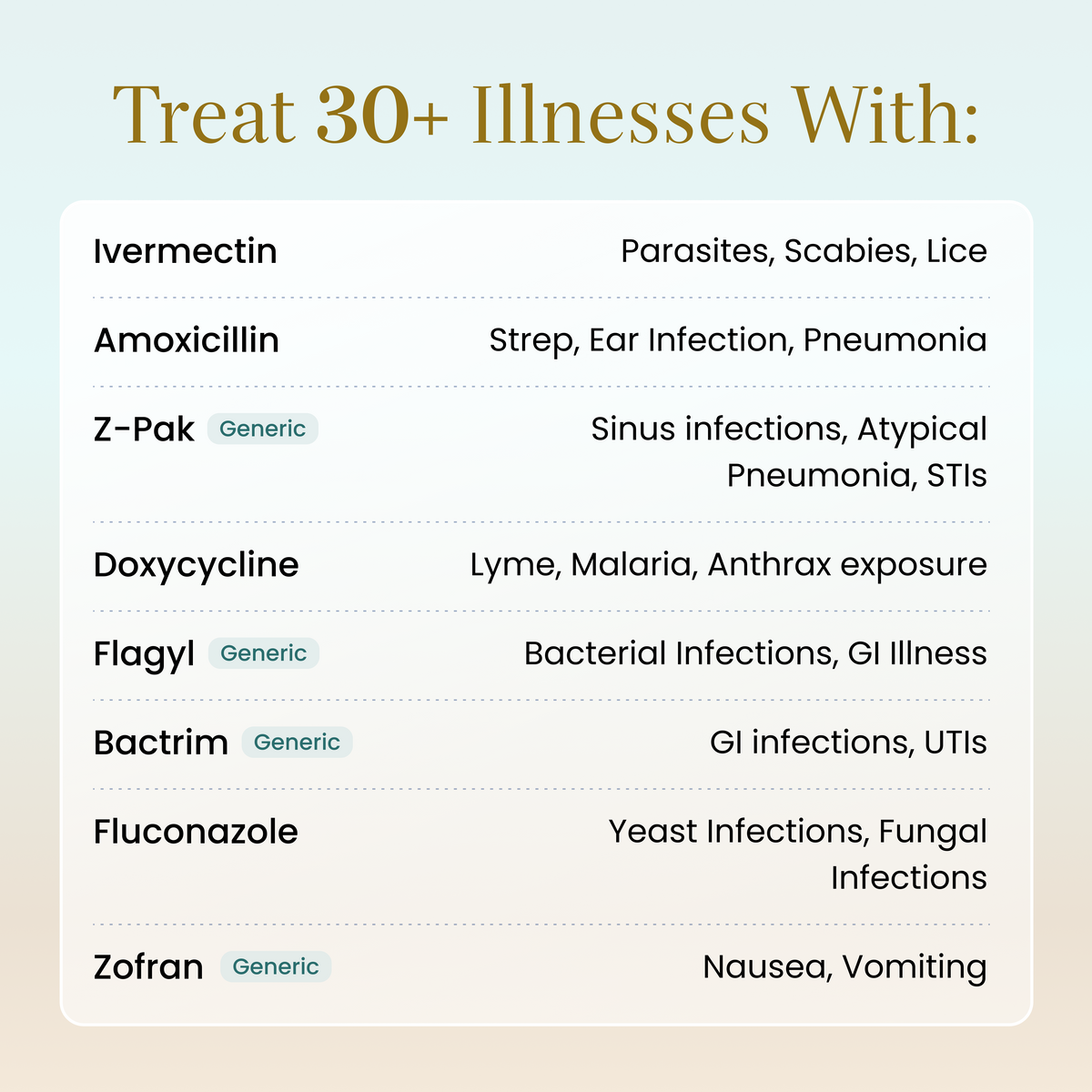
Medical Emergency Kit
Tick season doesn’t wait for a convenient moment. The Medical Emergency Kit puts 8 prescription-only medications — including Ivermectin, generic Z-Pak, and Amoxicillin — in your hands before you need them. Urgent care without the wait.
Shop NowYou Might Also Be Interested In
References
- CDC. (2026, April 23). CDC Data Show Weekly ER Visits for Tick Bites Higher than Usual. CDC Newsroom. https://www.cdc.gov/media/releases/2026/2026-cdc-data-show-weekly-er-visits-for-tick-bites-higher-than-usual.html
- Ticks. (2019). Centers for Disease Control and Prevention. https://www.cdc.gov/ticks/index.html
- Intero OHDev. (2019, May 24). Caution: DEET Based Insect Repellents. Quantum Health. https://quantumhealth.com/blogs/post/caution-deet-based-insect-repellents
- Goode, P., Ellse, L., & Wall, R. (2018). Preventing tick attachment to dogs using essential oils. Ticks and Tick-Borne Diseases, 9(4), 921–926. https://doi.org/10.1016/j.ttbdis.2018.03.029
- Alimi, D., Hajri, A., Jallouli, S., & Sebai, H. (2023). Toxicity, repellency, and anti-cholinesterase activities of bioactive molecules from clove buds Syzygium aromaticum L. Heliyon, 9(8), e18899. https://doi.org/10.1016/j.heliyon.2023.e18899
- Goode, P., Ellse, L., & Wall, R. (2018). Preventing tick attachment to dogs using essential oils. Ticks and Tick-Borne Diseases, 9(4), 921–926. https://doi.org/10.1016/j.ttbdis.2018.03.029
- Broderick, T. (n.d.). How to Protect Yourself from Ticks and the Dangerous Diseases They Spread. Scientific American. https://www.scientificamerican.com/article/how-to-protect-yourself-from-ticks-and-the-dangerous-diseases-they-spread/
- Landscaping a Tick-free Yard | Weston, MA. (2015). Westonma.gov. https://www.westonma.gov/166/Landscaping-a-Tick-free-Yard
- Protecting Your Yard. (2025, March 6). Harvard Health Publishing Lyme Disease. https://www.lyme.health.harvard.edu/protecting-your-yard/
Author


