


View Featured Categories
7 Foods That Help Lower Cholesterol Naturally


Nutrition · Heart Health
About 86 million U.S. adults have total cholesterol above 200 mg/dL, the point where doctors start paying closer attention, and roughly 47 million Americans take medication to manage it, according to the CDC. Those are big numbers. Smaller, and far less talked about, is the effect of what lands in your grocery cart, which can move LDL more than most people expect.
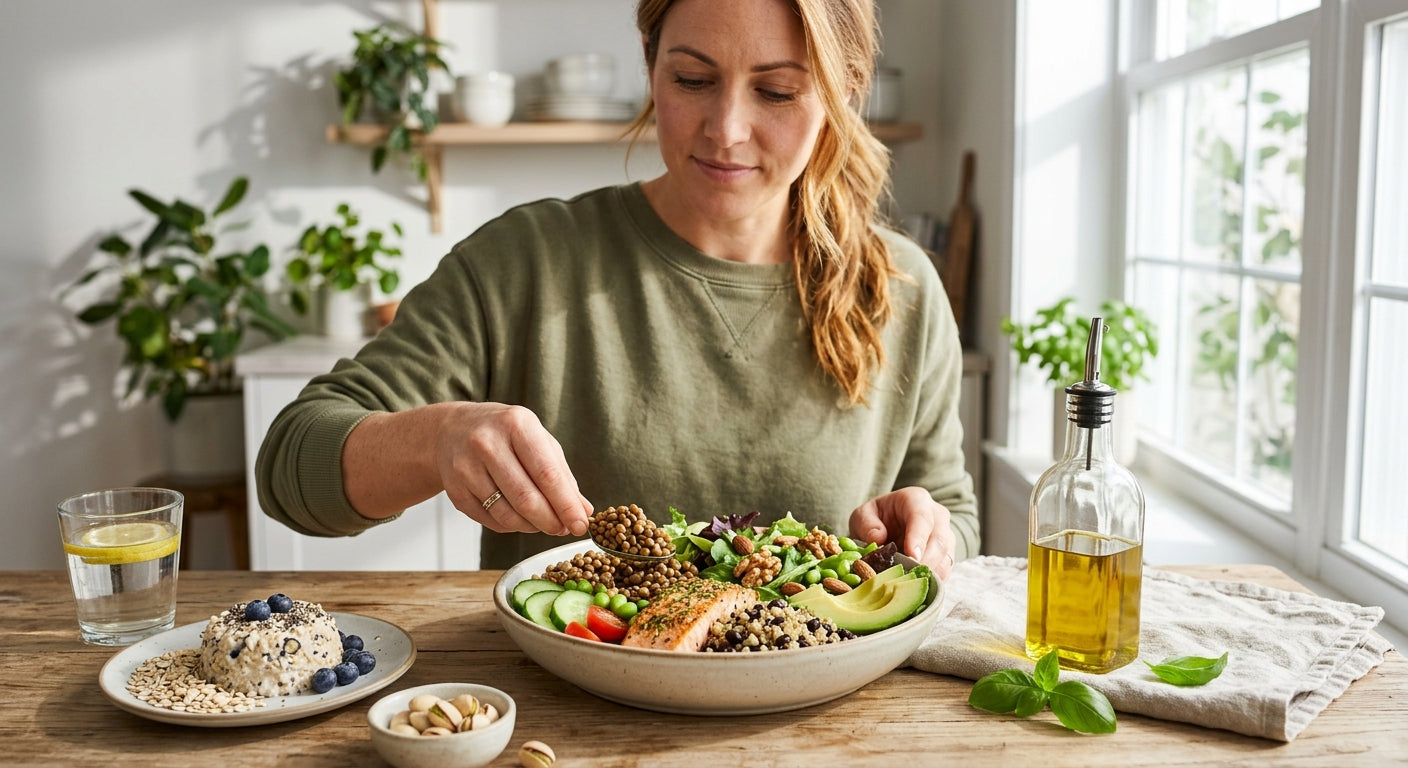
The foods with the best evidence for lowering cholesterol naturally are oats and barley, beans and lentils, nuts, soy foods, avocados, extra-virgin olive oil, and fatty fish. Most of them work by adding soluble fiber, plant protein, or unsaturated fat to your diet, or by replacing foods high in saturated fat. Each one moves LDL a little. Eaten together, they can move it a lot.
LDL, often called "bad" cholesterol, is the number most closely tied to plaque buildup in the arteries. Genetics sets part of your baseline, but diet is one of the few levers you control every day, and food's effect on LDL is one of nutrition's better-studied areas.
Below are seven foods worth building into your week, what the research shows for each, and how much it takes to make a difference.
How Food Affects Your Cholesterol
Your liver makes most of the cholesterol in your blood, and what you eat changes how much it makes and how much it clears. Soluble fiber binds bile acids in the gut, which the liver makes from cholesterol, so the liver pulls more LDL from the bloodstream to make new ones. Plant protein and plant sterols compete with cholesterol for absorption. Unsaturated fats, used in place of saturated fats, help the liver clear LDL more efficiently.
That last point matters as much as anything you add. An American Heart Association advisory concluded that replacing saturated fat with polyunsaturated fat lowers LDL and was linked to about 30% less cardiovascular disease in controlled trials (4). The gut also plays a role, which we cover in our article on how your gut microbiome supports healthy cholesterol levels.
7 Foods That Help Lower Cholesterol Naturally
1. Oats and Barley
Oats and barley are rich in beta-glucan, a soluble fiber that forms a gel in the gut and carries bile acids out of the body. A meta-analysis of 28 trials found that eating at least 3 grams of oat beta-glucan a day lowered LDL by about 0.25 mmol/L (roughly 10 mg/dL) compared with control diets (1). A bowl of oatmeal made from a cup of cooked oats provides about 2 grams, so adding barley to soups or a few tablespoons of oat bran gives you the rest. For more on where to find fiber, see our guide to the role of fiber in health and longevity.
2. Beans, Lentils, and Chickpeas
Pulses combine soluble fiber with plant protein, and they often replace meat on the plate. A meta-analysis of 26 trials found that about one serving a day (roughly 130 grams, or a little under a cup cooked) lowered LDL by about 5% (2). Lentil soup, black beans in a burrito bowl, or hummus as a snack all count.
3. Nuts
Almonds, walnuts, pistachios, and other tree nuts supply unsaturated fat, fiber, and plant sterols. A meta-analysis of 61 trials found that each daily one-ounce serving of tree nuts lowered LDL by about 5 mg/dL, with larger effects at higher intakes (5). A small handful a day is enough. Choose unsalted versions and use them instead of chips or crackers, rather than on top of them, since nuts are calorie-dense.
4. Soy Foods
Tofu, tempeh, edamame, and soy milk modestly lower LDL. A meta-analysis of 46 trials found that about 25 grams of soy protein a day lowered LDL by roughly 3% to 4% (6). That effect is small on its own, but soy earns its place because it often replaces red or processed meat, which also cuts saturated fat.
5. Avocados
Avocados are high in monounsaturated fat and fiber. In a controlled feeding study of 45 overweight adults, a moderate-fat diet that included one avocado a day lowered LDL by 13.5 mg/dL from baseline, more than a similar diet without avocado (7). Use avocado in place of butter, cheese, or mayonnaise on sandwiches and toast to get the most from the swap.
6. Extra-Virgin Olive Oil
Olive oil helps mostly through substitution. Cooking with it instead of butter, lard, or coconut oil lowers your saturated fat intake, one of the most reliable ways to lower LDL (4). Extra-virgin olive oil also contains polyphenols being studied for their effects on blood vessels. Use it to sauté, roast vegetables, and make dressings.
7. Fatty Fish
Salmon, sardines, mackerel, and trout don't lower LDL much on their own. Their main benefit is omega-3 fats, which lower triglycerides, another blood fat tied to heart risk (8), and they're a good replacement for red and processed meat. The American Heart Association recommends one to two seafood meals a week, especially oily fish (9).
| Food | How It Helps | Practical Target |
|---|---|---|
| Oats and barley | Beta-glucan fiber removes bile acids | 3 g beta-glucan a day |
| Beans and lentils | Soluble fiber plus plant protein | About 1 serving a day |
| Nuts | Unsaturated fat, fiber, plant sterols | 1 oz (a small handful) a day |
| Soy foods | Plant protein that replaces meat | About 25 g soy protein a day |
| Avocados | Monounsaturated fat and fiber | In place of butter or cheese |
| Extra-virgin olive oil | Replaces saturated cooking fats | Your main cooking oil |
| Fatty fish | Omega-3s lower triglycerides | 1–2 seafood meals a week |
Why These Foods Work Better Together
Any single food has a modest effect. The effect of several together is not. In a 2003 University of Toronto trial, researchers followed adults with high cholesterol on a "portfolio" diet built around oats, barley, beans, soy, almonds, and plant sterols. After four weeks, their LDL fell by 28.6%, close to the 30.9% drop seen in a group taking a statin, while a low-fat control diet lowered LDL by 8% (3). The study was small and short, and most people won't eat that strictly, but it shows how much stacking these foods can add up.
A realistic version looks like oatmeal with walnuts in the morning, a bean or lentil dish at lunch, fish or tofu cooked in olive oil at dinner, and fewer servings of butter, cheese, and fatty meat across the week. Food comes first, but for extra support, a natural supplement such as Cholesterol Support, which combines bergamot polyphenols, artichoke extract, and a probiotic strain, can help maintain healthy cholesterol levels alongside these changes. If you take a statin or other cholesterol medication, check with your doctor before adding it.
When to Talk to Your Doctor
Diet changes can meaningfully lower LDL, but they don't replace testing or treatment when your risk is high. Recheck your numbers about two to three months after changing your diet to see what's working.
Bring These Up With Your Doctor
- An LDL of 190 mg/dL or higher, which can point to an inherited condition
- A family history of early heart attack or stroke
- Diabetes, high blood pressure, or kidney disease alongside high cholesterol
- Numbers that haven't improved after a few months of diet changes
- Any plan to stop or change a cholesterol medication
If you're weighing medication, our article on cholesterol and statins walks through the trade-offs to discuss with your doctor.
Frequently Asked Questions About Foods That Lower Cholesterol
How quickly can food lower cholesterol?
LDL can start to fall within a few weeks of consistent changes. In the portfolio diet trial, most of the drop showed up within four weeks. A follow-up blood test two to three months after you change your diet gives a clearer picture.
What is the fastest way to lower cholesterol naturally?
Combining approaches works faster than any single food. Cut back on saturated fat from butter, cheese, and fatty meat, and add soluble fiber from oats, barley, and beans, along with nuts and soy—regular exercise and losing excess weight help too.
Are eggs bad for cholesterol?
For most people, saturated fat raises LDL more than the cholesterol in food does. Eggs can fit into a heart-healthy diet in moderation. Pay more attention to what they come with, like bacon, sausage, and butter.
Key Takeaway
Oats and barley, beans, nuts, soy, avocados, olive oil, and fatty fish each help in a different way. On their own, the effects are modest. Combined, and paired with less saturated fat, they can substantially lower LDL. Recheck your numbers after a few months, and work with your doctor if your risk is high.
You Might Also Be Interested In
References
- Whitehead, A., Beck, E. J., Tosh, S., & Wolever, T. M. (2014). Cholesterol-lowering effects of oat β-glucan: A meta-analysis of randomized controlled trials. American Journal of Clinical Nutrition, 100(6), 1413–1421. PubMed.
- Ha, V., et al. (2014). Effect of dietary pulse intake on established therapeutic lipid targets for cardiovascular risk reduction: A systematic review and meta-analysis of randomized controlled trials. CMAJ, 186(8), E252–E262. PubMed.
- Jenkins, D. J. A., et al. (2003). Effects of a dietary portfolio of cholesterol-lowering foods vs lovastatin on serum lipids and C-reactive protein. JAMA, 290(4), 502–510. PubMed.
- Sacks, F. M., et al. (2017). Dietary fats and cardiovascular disease: A presidential advisory from the American Heart Association. Circulation, 136(3), e1–e23. PubMed.
- Del Gobbo, L. C., Falk, M. C., Feldman, R., Lewis, K., & Mozaffarian, D. (2015). Effects of tree nuts on blood lipids, apolipoproteins, and blood pressure: Systematic review, meta-analysis, and dose-response of 61 controlled intervention trials. American Journal of Clinical Nutrition, 102(6), 1347–1356. PubMed.
- Blanco Mejia, S., et al. (2019). A meta-analysis of 46 studies identified by the FDA demonstrates that soy protein decreases circulating LDL and total cholesterol concentrations in adults. Journal of Nutrition, 149(6), 968–981. PubMed.
- Wang, L., Bordi, P. L., Fleming, J. A., Hill, A. M., & Kris-Etherton, P. M. (2015). Effect of a moderate fat diet with and without avocados on lipoprotein particle number, size and subclasses in overweight and obese adults: A randomized, controlled trial. Journal of the American Heart Association, 4(1), e001355. PubMed.
- Skulas-Ray, A. C., et al. (2019). Omega-3 fatty acids for the management of hypertriglyceridemia: A science advisory from the American Heart Association. Circulation, 140(12), e673–e691. PubMed.
- Rimm, E. B., et al. (2018). Seafood long-chain n-3 polyunsaturated fatty acids and cardiovascular disease: A science advisory from the American Heart Association. Circulation, 138(1), e35–e47. PubMed.
This article is for informational purposes only and is not a substitute for professional medical advice, diagnosis, or treatment. Talk with your healthcare provider before making significant changes to your diet or starting a supplement, especially if you have a medical condition or take prescription medication. *These statements have not been evaluated by the Food and Drug Administration. This product is not intended to diagnose, treat, cure, or prevent any disease.


