


View Featured Categories
First-of-its-Kind Study Finds Pre-Prescribed Emergency Medication Kits Get People Treated Fast and Avoid the ER


Research · Emergency Preparedness
Doctors from The Wellness Company have completed what they describe as the first study of its kind examining how people actually use pre-prescribed medications packed into emergency medical kits. The manuscript has been submitted for peer review.
The cross-sectional online survey reached 506 verified purchasers of an eight-medication prescribed kit, capturing how often the kits were used, self-reported outcomes, safety signals, free-text themes, and the rural-versus-urban distribution of respondents.
The study was authored by Dr. Peter McCullough, Nicolas Hulscher, MPH, Dr. Kelly Victory, Dr. Drew Pinsky, Dr. James Thorp, Peter Gillooly, MSc, and Dr. Harvey Risch.
"Respondents reported high engagement, frequent use for common acute illness, rapid symptom resolution, infrequent and mild side effects, and preparedness benefits extending even to never-users. These findings suggest that pre-prescribed emergency medication kits may represent a practical model for improving timely access to treatment and guided self-management of common acute illness."
— Dr. Peter McCullough, Chief Scientific Officer, The Wellness CompanyKits Are Being Used — Frequently, and Often on the Road
Nearly a third of respondents who used their kit did so while traveling or in a remote setting, underscoring one of the core use cases for having prescribed medication on hand before it's needed.
Key Findings
- Engagement with the kits was described by researchers as near universal
- Repeat use was common, especially for recurring acute illness
- Reported side effects were infrequent and mild
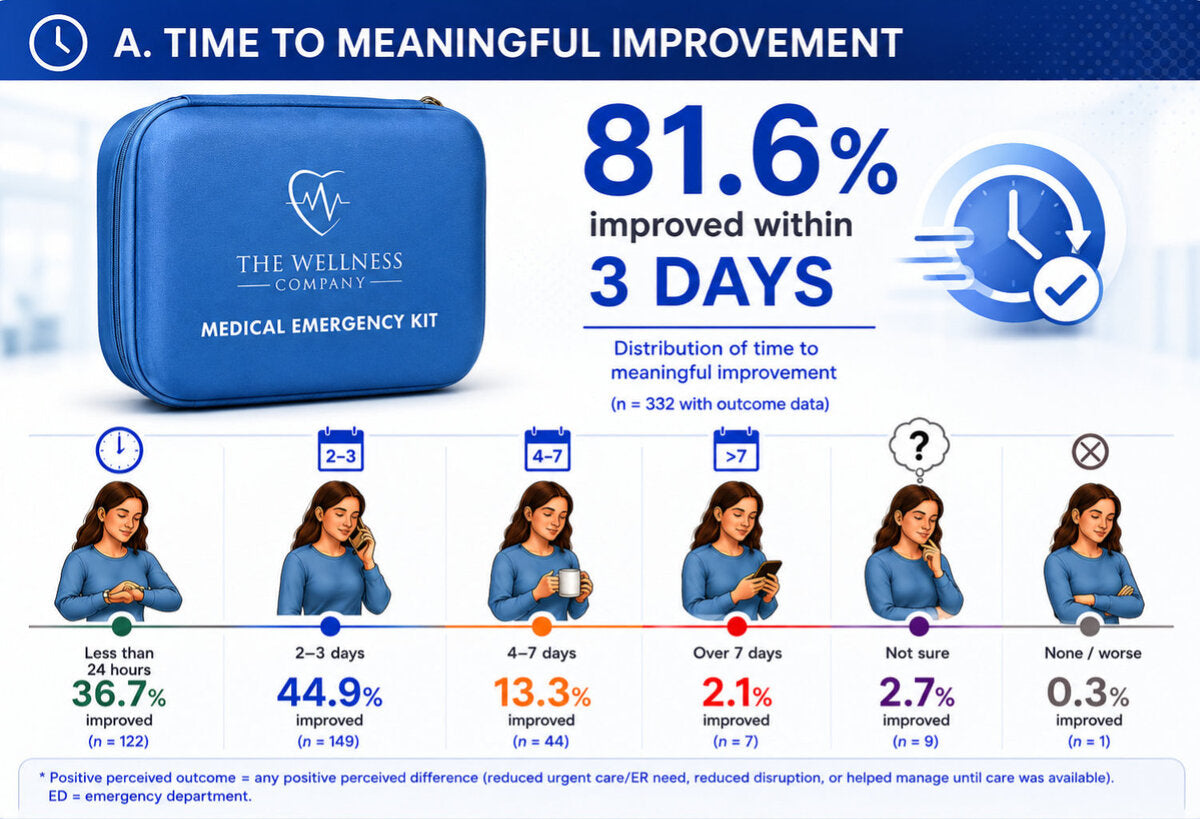
- Some degree of benefit was reported in 96% of intended-use episodes
"It is clear from the results of this study that those who purchased medical emergency kits are using those kits, and those who are using the kits are seeing meaningful improvement in their medical condition that allowed them to avoid a trip to urgent care or the hospital," said Peter Gillooly, CEO of The Wellness Company.
Why Timing Matters for Acute Illness
Nicolas Hulscher, MPH, pointed to the uneven access many Americans face when they need prescription treatment quickly. Older adults often contend with long clinic wait times and exposure risk in waiting rooms, while rural residents and others with limited access to care can face significant barriers to getting timely treatment. For many acute infectious illnesses, earlier treatment is linked to better outcomes and lower rates of complications.
Dr. Kelly Victory, an emergency physician and co-author of the study, framed the findings in terms of what she has seen firsthand: when families already had the right medications on hand, most felt meaningfully better within three days and never needed a clinic, urgent care, or hospital visit. In her view, that reflects early intervention — and early intervention can be life-saving.
A First Look at Real-World Use
Dr. McCullough noted that, to the research team's knowledge, this is the first real-world evidence on how direct-to-consumer prescribed emergency medication kits are actually being used — and the picture that emerged was a positive one. Customers used their kits frequently for common acute illness, often in the exact moments when conventional access to care is most strained, and reported rapid recovery with side effects that were both infrequent and mild.
"Our findings indicate that pre-prescribed medication kits can function as a structured, well-received, and largely appropriately used approach — providing essential medications prescribed prophylactically — to managing common acute illness outside conventional care settings," Dr. McCullough concluded.

The Takeaway
Having the right prescribed medications on hand before illness strikes — not after — appears to help people get treated faster, recover sooner, and avoid unnecessary trips to urgent care or the ER. The full manuscript is currently under peer review; a link will be added here once it is published.
Authors
Media Inquiries
Contact Chris Barron at cbarron@rightturnstrategiesdc.com to arrange interviews with the study's authors.


